


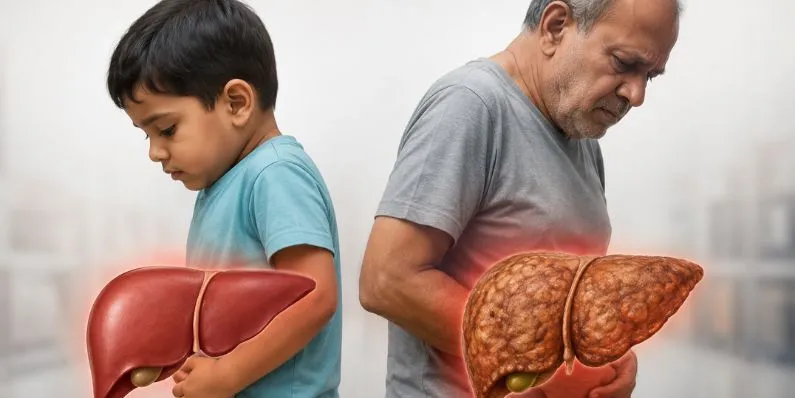
As a parent, hearing your child may have liver failure brings a fear that’s different from anything else, and one of the first things worth knowing is that children develop liver failure for very different reasons than adults do, and their path to recovery often looks different too.
Getting the right care from a pediatric liver specialist in Pune early on can make a meaningful difference in your child’s outcome.
At Jupiter Hospital, Dr. Bipin Vibhute, Liver & Multiorgan Transplant Surgeon, works closely with families navigating exactly this kind of diagnosis, and understanding these differences can bring real clarity during an overwhelming time.
Key Takeaways
- Children’s liver failure is usually caused by genetic, metabolic, or structural conditions (very different from typical adult causes)
- Biliary atresia is the most common cause of serious liver disease in infants
- Early signs like pale stools and dark urine are often the first clue, even before jaundice looks obvious
- Children generally have strong healing potential and can grow into healthy adulthood with proper treatment
- Pediatric liver transplant has excellent long-term outcomes, especially in specialized centers
How Is Liver Failure Different in Children Than in Adults? The Direct Answer
The biggest difference is the cause. In adults, liver failure is most often linked to lifestyle-related conditions that develop over years: alcohol use, viral hepatitis, or fatty liver disease. In children, liver failure is usually caused by conditions present from birth or genetic and metabolic disorders that appear early in life.
This isn’t a smaller version of the same disease; it’s often a completely different medical picture, requiring different diagnostic thinking, different specialists, and a treatment approach built specifically around a growing child’s needs.
There’s also a second major difference: children’s bodies have a remarkable capacity for growth and healing, which changes both how the disease is managed and what recovery can realistically look like.
Why Do Children Get Liver Failure From Completely Different Causes?
In infants, the most common serious cause of liver disease is biliary atresia, a condition where the bile ducts, which carry bile from the liver to the intestines, are blocked or absent from birth. Without treatment, this leads to progressive liver scarring and, if untreated, cirrhosis within the first two years of life.
Parents can also read more about the connection between biliary atresia and pediatric liver transplantation when understanding why some children eventually require transplant. biliary atresia and pediatric liver transplantation
Genetic and metabolic diseases are the other major cause in young children: conditions that affect how the body processes certain substances, placing extra strain on the liver from a very early age.
In older children and adolescents, causes shift closer to what’s seen in adults: chronic viral hepatitis, autoimmune liver disease, and increasingly, metabolic conditions linked to obesity.
Childhood metabolic liver disease can progress silently, so understanding conditions such as NASH in children and teenagers can help parents recognize why liver evaluation may sometimes be necessary even when obvious symptoms are absent. NASH in children and teenagers
Sudden, acute liver failure in children (occurring in a previously healthy child) has its own distinct causes too, including certain infections, metabolic conditions, and in a meaningful number of cases, no identifiable cause is ever found despite thorough testing.
What Are the Warning Signs Parents Should Never Ignore?
The earliest signs of liver problems in children are often subtle and easy to mistake for something else.
In infants, persistently pale or grey-colored stools and unusually dark urine are important early warning signs, sometimes appearing even before jaundice becomes obviously visible. Poor weight gain, unusual irritability, and disrupted sleep can also be early indicators.
In older children, watch for jaundice (yellowing of skin or eyes), persistent itching, unexplained bruising or bleeding, abdominal swelling, and ongoing fatigue that doesn’t match their normal energy levels.
Any combination of these symptoms deserves prompt medical evaluation, as earlier identification consistently leads to better outcomes, particularly for conditions like biliary atresia, where timing of treatment significantly affects long-term liver health.
How Do Doctors Diagnose Liver Failure in a Child?
Diagnosis typically starts with blood tests to assess liver function, followed by imaging and sometimes specialized genetic or metabolic testing to identify the underlying cause.
For suspected biliary atresia, imaging studies and sometimes a minor surgical procedure are used to directly visualize whether the bile ducts are properly formed and functioning.
For suspected metabolic or genetic conditions, specific blood and urine tests can identify the underlying issue, which is essential since treatment approaches differ significantly between conditions.
Doctors also use specialized scoring systems, including the Pediatric End-Stage Liver Disease (PELD) score, which factors in growth and nutritional status alongside standard liver function markers, recognizing that a child’s growth trajectory is itself an important measure of how well their liver is coping.
What Treatment Options Exist for Children?
Treatment depends heavily on the underlying cause, and timing often matters enormously in pediatric cases.
For biliary atresia, a surgical procedure called the Kasai procedure is typically performed early in infancy to restore bile flow. When performed at the right time, this can significantly delay or sometimes avoid the need for transplant, though many children will eventually need one regardless.
For metabolic and genetic conditions, treatment often involves a combination of dietary management, specific medications, and close monitoring of liver function over time.
For children whose liver disease progresses despite these treatments, liver transplant becomes a genuinely well-established, life-restoring option, as pediatric liver transplant has strong long-term outcomes, particularly when performed at specialized centers experienced in pediatric cases.
If your child has been showing signs of jaundice, unusual stool color, or growth concerns, getting a thorough evaluation early gives your child the best possible path forward. Dr. Bipin Vibhute and his team at thelivertransplant.com in Pune work with families to identify the underlying cause quickly and build a treatment plan suited specifically to your child’s needs.
Treatment decisions should always be individualized by the child’s treating team. For additional authoritative information, the Ministry of Health & Family Welfare’s Standard Treatment Guidelines for Organ Transplant – Liver provides an official government reference on liver transplantation and related clinical care.
How Does Recovery and Growth Differ for Children After Treatment?
This is one of the most hopeful aspects of pediatric liver care: the majority of children diagnosed with liver disease early in life can grow, develop, and reach adulthood in good health.
Unlike adult patients, where the focus is often on stabilizing existing damage, treatment in children is also built around supporting normal growth and development. Nutrition, weight gain, and developmental milestones are actively monitored alongside liver function itself.
Children who undergo liver transplant generally show excellent long-term survival, and importantly, research shows that children who survive the first year after transplant have survival outcomes comparable to children who never needed emergency transplantation at all.
This distinction matters because it reframes early treatment not just as crisis management, but as an investment in a genuinely long, healthy life ahead.
How Should Parents Cope Emotionally With This Diagnosis?
This diagnosis touches something deeply protective in every parent, and that fear is completely valid; you are not overreacting by feeling overwhelmed.
Ask your child’s medical team direct questions: what specific condition is causing this, what the realistic treatment plan looks like, and what signs would indicate things are improving or worsening. Clear information tends to ease anxiety more than avoiding hard conversations.
Connecting with other parents who’ve navigated a similar diagnosis, when possible, can also provide a kind of understanding and support that’s hard to find elsewhere.
For families looking for pediatric liver care in Pune, parents can also find the clinic location and consultation details on https://thelivertransplant.com/.
Most importantly, remember that pediatric liver care has advanced enormously, and many children diagnosed with even serious liver conditions in infancy go on to live full, healthy lives.
Can Liver Disease in Children Be Caught Early or Prevented?
For genetic and structural conditions like biliary atresia, prevention in the traditional sense isn’t possible, but early detection changes outcomes significantly.
Routine newborn checkups that monitor stool color, skin tone, and weight gain are genuinely important screening opportunities, since these simple observations can catch biliary atresia and other conditions before they progress significantly.
For older children, maintaining a healthy weight, ensuring hepatitis vaccinations are up to date, and promptly addressing any unusual symptoms all support long-term liver health.
If there’s a family history of genetic or metabolic liver conditions, discussing this proactively with your child’s pediatrician allows for earlier, more targeted screening.
Final Thoughts
So, how is liver failure different in children than in adults? The causes are largely different, the diagnostic approach is more specialized, and — encouragingly — children’s capacity for growth and recovery is genuinely remarkable when the right care begins early.
From biliary atresia to genetic conditions, pediatric liver disease requires a distinct kind of expertise, but it also carries real, well-documented reasons for hope.
If your child has been diagnosed with or is being evaluated for liver disease, know that the path forward, while difficult, is one that specialized pediatric liver care navigates successfully every day.
Frequently Asked Questions
Can a baby be born with liver failure without any warning signs?
It’s uncommon, but conditions like biliary atresia can progress quietly at first, which is why routine newborn checks, including stool color observation, matter so much in catching it early.
Does liver failure in children always mean a transplant is needed?
No, many children respond well to targeted treatment like the Kasai procedure or metabolic management, and transplant is only pursued when the liver disease continues to progress despite treatment.
Can genetic liver conditions be passed to future children?
Some genetic and metabolic liver conditions can be inherited, so genetic counseling is often recommended for families planning future pregnancies after a diagnosis.
Is jaundice in newborns always a sign of liver disease?
No, mild jaundice is common and often harmless in newborns, but jaundice that persists beyond two to three weeks, or is accompanied by pale stools, should be evaluated promptly.
How is a child’s transplant different from an adult’s transplant?
Pediatric transplants often use a smaller portion of a donor liver, sized appropriately for the child, and require specialized surgical and post-transplant care tailored to a growing body.
Can children with liver disease attend school and play normally?
In many cases, yes, especially once their condition is well-managed, though your child’s care team can guide specific activity recommendations based on their individual condition.
What is the long-term outlook for a child after a Kasai procedure?
Outcomes vary, but many children experience significant improvement, and while some will eventually need a transplant later in childhood or adulthood, the procedure often provides meaningful additional healthy years.
Can a child develop liver disease from something they ate or drank?
While rare, certain toxins or excessive medication doses can cause liver injury in children, which is why medications should always be dosed carefully according to a child’s weight and age.
How often should a child with liver disease see their specialist?
This depends on the specific condition and severity, but many children are monitored every few months, with more frequent visits during active treatment or right after a Kasai procedure or transplant.
Can a child fully catch up on growth after liver treatment?
Many children show significant catch-up growth once liver function improves or stabilizes, especially when nutritional support is actively part of their treatment plan.
Recent Comments