


Can NASH Be Missed on an Ultrasound Scan?
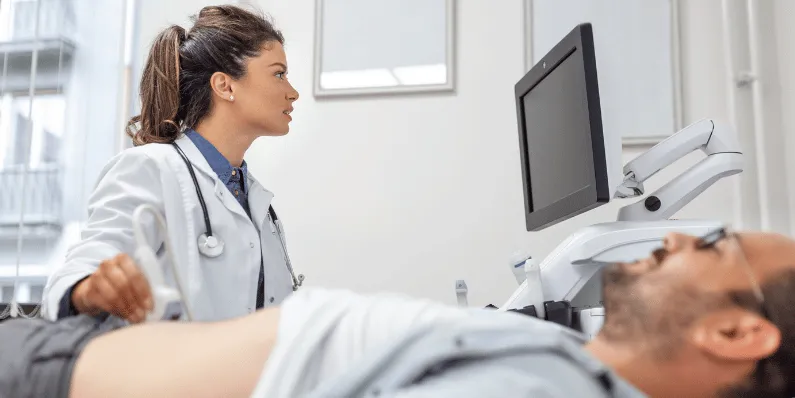
Your liver ultrasound came back normal. Your doctor was reassured. But your liver enzymes are elevated, you feel fatigued, you have abdominal discomfort and the “all clear” from the scan has not actually cleared your worry.
A normal liver ultrasound does not rule out NASH and understanding why requires knowing what ultrasound can and cannot detect.
For accurate NASH ultrasound diagnosis in Pune and access to the non-invasive tests that go beyond standard scanning, Dr. Bipin Vibhute at thelivertransplant.com provides comprehensive hepatology assessment. Visit thelivertransplant.com to book your appointment.
Key Takeaways In This Article You Will Learn:
- Why ultrasound misses NASH in a significant proportion of patients
- The specific fat percentage threshold below which ultrasound cannot detect fatty liver
- What tests are more accurate than ultrasound for NASH assessment
- How to interpret a normal ultrasound alongside elevated liver enzymes
- What the FIB-4 score is and why it should be calculated in every suspected NASH patient
What Can Ultrasound Actually See in NASH?
Ultrasound is the most widely used initial investigation for suspected fatty liver it is inexpensive, accessible, and non-invasive. But its limitations in NASH assessment are significant and frequently misunderstood by both patients and non-specialist clinicians.
- What Ultrasound Detects Well?
Ultrasound identifies hepatic steatosis by detecting increased echogenicity fatty liver reflects ultrasound waves differently from normal liver tissue, appearing brighter (hyperechoic) on the scan image.
For moderate-to-severe fatty liver (greater than 20–30% hepatic fat content), ultrasound is reasonably sensitive detecting steatosis in approximately 60–70% of cases at this severity.
- The Critical Threshold Below 30% Fat
Here is the information most patients are never given.
When hepatic fat content is below 20–30% of liver cells, ultrasound is unreliable. Sensitivity drops to 55–65% or lower in studies using MRI as the reference standard.
A patient with 15–20% hepatic fat content already metabolically significant will often have a completely normal-appearing liver on ultrasound. The scan shows no increased echogenicity because the fat concentration is below the visual detection threshold.
This is not a radiologist error. It is a physical limitation of the technology.
- What Ultrasound Cannot Detect at All?
Even when fatty liver is visible on ultrasound, the scan cannot assess:
NASH activity whether inflammation and hepatocyte injury are present alongside the fat (the distinction between NAFL and NASH). Fibrosis stage how much scarring has accumulated. Early fibrosis (F1–F2) is essentially invisible on standard ultrasound. Fibrosis can only be suggested on ultrasound when it is very advanced producing a coarsened echotexture and altered liver contour in cirrhosis.
A patient with significant NASH and F2 fibrosis may have a completely normal ultrasound. The fat, the inflammation, and the early scarring are all below or beyond the scan’s detection capability.
For patients in Pune who have received a normal ultrasound result but still have concerns, specialist liver disease services at The Liver Transplant offer FibroScan assessment and comprehensive hepatology evaluation that goes well beyond standard imaging.
What Happens When the Scan Looks Normal but Symptoms Are There?
This is the clinical scenario that most frequently leads to delayed NASH diagnosis and it requires a specific diagnostic response rather than reassurance and discharge.
- The Elevated Enzymes With Normal Scan Pattern
If a patient has elevated ALT or AST alongside a normal liver ultrasound, the combination should not be dismissed as “nothing wrong.”
Elevated liver enzymes in a metabolically at-risk patient with overweight, type 2 diabetes, hypertriglyceridaemia, or metabolic syndrome represent NASH until proven otherwise, regardless of what the scan shows.
The normal scan reduces the probability of severe steatosis or established cirrhosis but does not exclude early-to-moderate NASH with significant fibrosis.
Understanding what a liver function test actually measures and which values signal genuine hepatocyte injury versus mild metabolic stress helps patients interpret their own blood results more accurately: What Is a Liver Function Test? explains each marker, what elevated levels indicate, and when further investigation is warranted.
- The Correct Clinical Response
When ultrasound is normal but metabolic risk factors and/or elevated enzymes are present, the evidence-based next steps are:
FIB-4 score calculation a validated blood test-based fibrosis score. FibroScan assessment liver stiffness measurement that detects fibrosis independent of steatosis levels. MRI-based fat quantification if precise hepatic fat assessment is needed. Liver biopsy when non-invasive tests are inconclusive and fibrosis staging is clinically urgent.
What Is the FIB-4 Score and Why Should Every NASH Patient Know It?
The FIB-4 score is one of the most useful, validated, and underused tools in NASH assessment yet most patients have never heard of it.
- How It Is Calculated?
FIB-4 = Age × AST / (Platelet count × √ALT)
All four values age, AST, platelet count, and ALT are available from a standard blood test. The calculation takes seconds with any online calculator.
- What the Score Means?
FIB-4 below 1.30 low probability of advanced fibrosis (F3–F4). This is reassuring.
FIB-4 between 1.30 and 2.67 intermediate zone. Further assessment with FibroScan or biopsy is recommended.
FIB-4 above 2.67 high probability of advanced fibrosis. Urgent hepatology referral and fibrosis staging with imaging or biopsy is needed.
The FIB-4 score is recommended as the primary non-invasive fibrosis screening tool by the European Association for the Study of the Liver (EASL) and American Association for the Study of Liver Diseases (AASLD) guidelines for NAFLD/NASH.
For patients wanting to understand what FibroScan assessment involves and how liver stiffness measurement translates into a fibrosis stage, Is a FibroScan Beneficial to Your Liver? provides a clear patient-level explanation of the procedure and what its results mean clinically.
Any patient with suspected NASH should have their FIB-4 calculated it takes three minutes and provides more clinically actionable information than the ultrasound result.
What Tests Are More Accurate Than Ultrasound for NASH?
- FibroScan (Transient Elastography)
FibroScan measures liver stiffness by sending a shear wave through the liver and measuring how quickly it propagates stiffer liver (more fibrosis) transmits the wave faster.
It is far more accurate than ultrasound for fibrosis staging and can detect early fibrosis that is completely invisible on standard scanning.
Modern FibroScan devices also measure CAP (Controlled Attenuation Parameter) a simultaneous assessment of hepatic fat content that can detect steatosis from approximately 10–15% fat content, significantly lower than the 20–30% ultrasound threshold.
FibroScan is the most practical, validated, non-invasive tool available for comprehensive NASH assessment measuring both fat and fibrosis in a single 10-minute examination.
- MRI PDFF The Gold Standard for Fat Quantification
MRI Proton Density Fat Fraction (MRI-PDFF) is the most accurate non-invasive method for quantifying hepatic fat content, with accuracy to approximately 5% fat fraction.
It can detect and accurately quantify hepatic steatosis well below the threshold visible on ultrasound. For research purposes and in clinical situations where precise fat quantification is needed, MRI-PDFF is the reference standard.
It does not assess fibrosis directly a separate MRI elastography sequence or FibroScan is needed for fibrosis staging.
- Liver Biopsy The Definitive Standard
Liver biopsy remains the only test that simultaneously confirms NASH activity (inflammation and hepatocyte injury) and accurately stages fibrosis. No non-invasive test fully replaces it for diagnostic certainty.
It is recommended when:
Non-invasive tests give discordant or indeterminate results. Clinical decision-making requires histological confirmation for example, eligibility for resmetirom or other specific treatments. There is suspicion of an alternative or co-existing liver condition alongside NASH.
For patients who want a clear, patient-friendly explanation of what a liver biopsy involves, what the results mean in practice, and when it is genuinely necessary, Liver Biopsy for NASH What It Involves and Whether You Actually Need One covers the full procedure and decision-making process in accessible clinical detail.
Liver biopsy is not dangerous or extraordinarily painful when performed by an experienced hepatologist it is a day procedure, performed under local anaesthesia, with a small tissue sample taken through the skin under ultrasound guidance.
Its main limitation is sampling variability the biopsy samples only 1/50,000th of the liver, and NASH can be patchy, meaning a sample may not fully represent the entire liver’s condition.
If you have been told your liver scan is normal but you have elevated enzymes, metabolic risk factors, or persistent symptoms, the specialist hepatology team through Dr. Bipin Vibhute at thelivertransplant.com provides comprehensive fatty liver normal ultrasound symptoms evaluation with FibroScan and clinical assessment in Pune. Visit thelivertransplant.com to book today.
What Are the Symptoms of NASH When the Scan Looks Normal?
NASH is known as a “silent” disease but many patients do have symptoms, even when imaging appears unremarkable.
- Common Symptoms That Suggest NASH Despite Normal Scan
Right upper quadrant discomfort or dull ache the liver itself has no pain fibres, but the liver capsule (its outer covering) can stretch as the liver enlarges, causing this aching sensation.
Fatigue one of the most consistently reported symptoms in NASH, driven by metabolic dysfunction and, in some patients, subclinical hepatic encephalopathy (impaired liver detoxification affecting brain energy).
Abdominal bloating related to altered gut motility from the gut-liver axis dysfunction that accompanies NASH.
These symptoms are not diagnostic they occur in many conditions. But their presence in a metabolically at-risk patient with even mildly elevated liver enzymes justifies investigation beyond reassurance.
Final Thoughts
A normal liver ultrasound does not mean a healthy liver. It means the liver has no detectable abnormality at the resolution threshold of that scan which may be lower than the level of disease actually present.
NASH with significant fibrosis can be completely invisible on standard ultrasound. Patients with elevated enzymes, metabolic risk factors, and symptoms deserve FIB-4 calculation, FibroScan assessment, and hepatology referral not repeat ultrasounds and continued reassurance.
The question is not just “does my liver look normal on scan” but “has my fibrosis been accurately assessed with the right tools?” Those are different questions and only the second one truly protects your liver.
Frequently Asked Questions
Can ultrasound miss fatty liver?
Yes ultrasound cannot reliably detect hepatic steatosis below approximately 20–30% fat content. Studies comparing ultrasound to MRI-based fat quantification show sensitivity of 55–65% for mild steatosis. A normal liver ultrasound does not exclude early-to-moderate fatty liver or NASH with significant fibrosis. Patients with metabolic risk factors and elevated liver enzymes require FIB-4 calculation and FibroScan assessment regardless of ultrasound findings.
What is the most accurate test for NASH?
Liver biopsy remains the gold standard for simultaneously confirming NASH activity and accurately staging fibrosis. For non-invasive assessment, FibroScan (transient elastography with CAP) is the most practical combined tool for assessing both fat and fibrosis. MRI-PDFF is the most accurate non-invasive fat quantification method. FIB-4 score is the most validated blood test-based screening tool for advanced fibrosis. No single non-invasive test fully replaces biopsy for diagnostic certainty.
Is FibroScan better than ultrasound for liver disease?
For fibrosis staging, yes significantly. FibroScan measures liver stiffness directly and can detect early fibrosis (F1–F2) that is completely invisible on standard ultrasound. For fat detection, FibroScan’s CAP measurement can also detect steatosis at lower thresholds than ultrasound. Standard ultrasound is more useful for structural assessment (detecting masses, bile duct dilation, portal hypertension signs) but is insufficient as a standalone fibrosis assessment tool.
Why does my liver scan look normal but I have elevated liver enzymes?
Because standard ultrasound cannot detect the liver inflammation and early fibrosis responsible for enzyme elevation in NASH. Elevated ALT and AST reflect hepatocyte injury which occurs at the cellular level, invisible to ultrasound until it has produced structural changes. A normal scan with elevated enzymes in a metabolically at-risk patient should prompt FIB-4 calculation and FibroScan, not reassurance and repeat scanning.
What does a FIB-4 score of 2.0 mean?
A FIB-4 score between 1.30 and 2.67 falls in the intermediate zone, indicating that advanced fibrosis (F3–F4) cannot be reliably excluded by blood tests alone. This intermediate result warrants further evaluation with FibroScan liver stiffness measurement to clarify the fibrosis stage. Only a FIB-4 below 1.30 provides sufficient reassurance against advanced fibrosis to avoid further testing in otherwise low-risk patients.
Written By

Similar Posts

Sahyadri Hospital Conducts 100th Liver Transplant Op
Source::Times Of IndiaAbout 50% of the pediatric patients who require a liver transplant have biliary atresia. Other disease states that progress to end-stage liver disease among...
Sahyadri Hospiatal Conducts 100th Liver Transplant Op
Source::Times Of IndiaAbout 50% of the pediatric patients who require a liver transplant have biliary atresia. Other disease states that progress to end-stage liver disease among...
Sahyadri Hospital Conducts 100th Liver Transplant Op
Source::Times Of IndiaAbout 50% of the pediatric patients who require a liver transplant have biliary atresia. Other disease states that progress to end-stage liver disease among...