


What Is the Difference Between Acute and Chronic Liver Failure?
If you’ve heard the term “liver failure” and you’re trying to understand whether this happened suddenly or has been building for years, that distinction matters more than almost anything else in understanding what comes next. Knowing which type you’re dealing with is often the first step toward the right liver failure treatment in Pune.
At Jupiter Hospital, Dr. Bipin Vibhute, Liver & Multiorgan Transplant Surgeon, explains this exact difference to patients and families regularly, and understanding it can turn confusion into a clear, actionable picture.
Key Takeaways
- Acute liver failure happens suddenly, within days to weeks, in a liver with no prior significant damage
- Chronic liver failure develops slowly, over months or years, usually from long-standing liver disease
- The two have very different causes, warning signs, and treatment approaches
- Acute-on-chronic liver failure is a distinct, important third category worth understanding
- Both types can be treated effectively, and transplant is a well-established option when needed for either
What Is the Difference Between Acute and Chronic Liver Failure? The Direct Answer
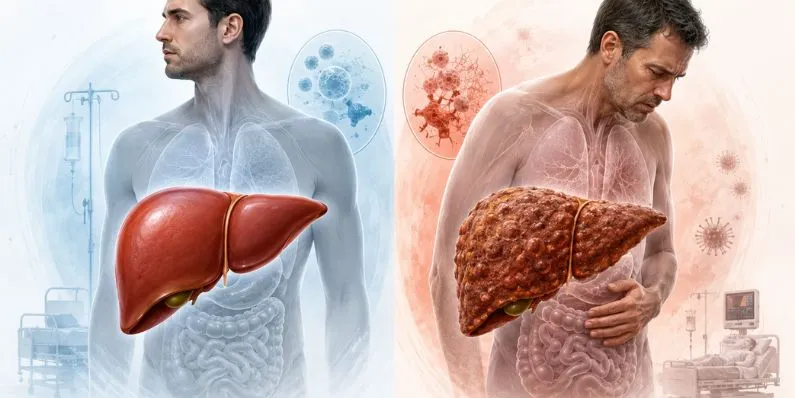
The core difference is speed and starting point. Acute liver failure develops rapidly , typically within days to a few weeks, in someone whose liver was healthy just before this happened. Chronic liver failure develops gradually, usually over years, as a result of ongoing liver damage that slowly progresses to advanced scarring.
Think of it this way: acute liver failure is a sudden storm in a previously calm liver, while chronic liver failure is the slow erosion of a coastline over many years. Both are serious, but they require completely different diagnostic thinking, urgency levels, and treatment strategies.
| Feature | Acute Liver Failure | Chronic Liver Failure |
|---|---|---|
| Onset | Sudden, days to a few weeks | Gradual, usually years |
| Prior liver health | Previously healthy liver | Long-standing liver disease already present |
| Common causes | Paracetamol overdose, viral hepatitis, toxins | Alcohol use, chronic hepatitis B/C, fatty liver disease |
| Underlying tissue change | Little to no prior scarring | Progressive fibrosis leading to cirrhosis |
| Early symptoms | Nausea, fatigue, abdominal pain | Often silent for years (compensated stage) |
| Warning signs of severity | Confusion, jaundice, abnormal clotting, appearing within days | Fluid buildup, jaundice, confusion appearing after years (decompensation) |
| Regenerative potential | High, liver tissue was healthy beforehand | Lower, years of scarring limit reversal |
| Urgency of treatment | Emergency, hours to days matter | Ongoing management, ideally caught before decompensation |
| Transplant role | Considered if condition doesn’t stabilize quickly | Considered once complications resist standard treatment |
What Actually Causes Each Type?
Acute liver failure is most commonly caused by medication toxicity , particularly paracetamol (acetaminophen) overdose , along with certain viral infections like acute hepatitis B, specific toxin exposures, and rare autoimmune reactions that suddenly attack liver tissue.
Chronic liver failure, by contrast, typically results from years of ongoing injury: long-term alcohol use, chronic viral hepatitis B or C, fatty liver disease linked to obesity or diabetes, or long-standing autoimmune liver conditions. This sustained injury leads to progressive scarring, known as fibrosis, which eventually advances to cirrhosis.
A stage covered in more detail in our article on what is liver cirrhosis, which explains how this scarring develops and what it means for liver function.
There’s also a third, important category: acute-on-chronic liver failure, where someone with existing chronic liver disease experiences a sudden, severe worsening , often triggered by an infection, alcohol binge, or another acute illness layered on top of their existing condition.
How Fast Does Each One Develop , and How Serious Can It Get?
Acute liver failure escalates quickly, sometimes within days. Early symptoms, nausea, fatigue, abdominal discomfort , can be easy to dismiss, but confusion, jaundice, and bleeding problems can follow rapidly, making this a genuine medical emergency requiring immediate attention.
Chronic liver failure progresses far more slowly, often silently, for years before symptoms become noticeable. Many patients have significant scarring, called compensated cirrhosis, while still feeling relatively well.
It’s only once complications appear, fluid buildup in the abdomen, confusion, or bleeding, that the condition is considered to have decompensated into liver failure.
Acute-on-chronic liver failure behaves more like the acute form, with rapid deterioration, even though it’s built on a foundation of pre-existing chronic disease, which is exactly why it requires urgent recognition despite the person having a known, longer-term liver condition.
How Do Doctors Tell the Two Apart?
Doctors rely on a combination of medical history, timeline of symptoms, and specific blood tests to distinguish between these types.
A key diagnostic clue is whether there’s any prior history of liver disease. No history, combined with sudden onset of jaundice, confusion, and abnormal blood clotting, points strongly toward acute liver failure.
A known history of cirrhosis or chronic hepatitis, with symptoms developing over a longer period, points toward chronic liver failure.
Blood tests assessing liver enzymes, bilirubin, and clotting function (INR) help confirm the severity, while imaging studies can reveal whether the liver already shows signs of long-standing scarring , a clear sign the process has been chronic rather than sudden.
What Treatment Looks Like for Each Type?
For acute liver failure, treatment is urgent and cause-specific. If paracetamol overdose is the cause, an antidote called N-acetylcysteine can be highly effective, especially given early.
For viral or toxin-related causes, supportive care focuses on managing complications while the liver has a chance to regenerate.
For chronic liver failure, treatment centers on addressing the underlying disease long-term , antiviral therapy for hepatitis, complete abstinence for alcohol-related disease, and metabolic management for fatty liver disease, alongside ongoing management of complications like fluid buildup or confusion as they arise.
If you’d like a deeper look at how these approaches differ by cause and stage, our guide on liver failure: its causes, symptoms and treatment breaks this down further.
For both types, when the liver’s damage is too severe to recover through medical treatment alone, liver transplantation becomes a genuinely effective, well-established solution.
Can One Type Turn Into the Other?
Chronic liver failure can never “become” acute liver failure in the sense of reversing its history, but a person with chronic liver disease can experience a sudden, severe deterioration, which is precisely what defines acute-on-chronic liver failure.
This is an important nuance for patients with known chronic liver disease to understand: a sudden worsening of symptoms should never be dismissed as “just part of my chronic condition.”
It may represent a distinct, urgent event requiring immediate medical evaluation, separate from the slow progression they may have been monitoring for years.
If you’re unsure whether your liver condition, or a loved one’s, fits the acute, chronic, or acute-on-chronic pattern, getting a clear answer changes how urgently you need to act.
Dr. Bipin Vibhute and his team at Jupiter Hospital in Pune can evaluate your specific situation and determine exactly where you stand, so decisions about treatment are based on clarity, not guesswork.
You can get in touch with the Pune-based liver care team here to schedule an evaluation.
What Does Recovery Look Like for Acute vs. Chronic Cases?
Acute liver failure often has strong recovery potential, precisely because the underlying liver tissue wasn’t damaged before the event.
When treatment begins early, particularly for paracetamol overdose treated with the right antidote, many patients recover fully or nearly fully since the liver’s regenerative capacity is largely intact.
Chronic liver failure recovery looks different. Early-stage chronic liver disease, particularly compensated cirrhosis, can sometimes improve if the underlying cause is treated effectively.
Once decompensation has occurred, full reversal of existing scarring is less likely, though controlling the underlying cause can still meaningfully slow further damage and improve day-to-day function.
For both types, when the liver’s damage exceeds what treatment can restore, transplant offers a genuinely strong long-term outcome and understanding what recovery after a liver transplant actually involves can help set realistic expectations for that path.
How Should Families Approach Each Situation Differently?
With acute liver failure, speed is everything. Any suspected overdose, sudden confusion, or rapidly worsening symptoms in a previously healthy person should prompt immediate emergency care, there is no time to “wait and see.”
With chronic liver failure, consistency is everything. Regular monitoring, adherence to treatment, and prompt attention to any new symptom, however small it seems, are what protect long-term liver function and catch decompensation early.
In both situations, staying closely engaged with your medical team and asking direct questions about what stage or type you’re dealing with gives you the clearest path to acting appropriately and confidently.
Final Thoughts
So, what is the difference between acute and chronic liver failure? One happens suddenly in a previously healthy liver; the other develops gradually from long-standing disease , and this distinction shapes everything from urgency to treatment to recovery potential.
Understanding which type applies to your situation, or a loved one’s, replaces uncertainty with a clear path forward.
Whether the situation calls for immediate emergency action or steady, long-term management, effective treatment exists for both , and knowing exactly where you stand is the first step toward getting the right care at the right time.
Frequently Asked Questions
Is acute liver failure more dangerous than chronic liver failure?
Both can be serious, but acute liver failure typically requires faster emergency intervention since deterioration can happen within days, while chronic liver failure usually allows more time for planned management.
Can someone have chronic liver disease for years without knowing it?
Yes, chronic liver disease, especially in its early compensated stage, often causes few or no symptoms, which is why routine liver function testing matters even without obvious signs of illness.
Does acute liver failure always require a transplant?
No, many patients recover with prompt supportive treatment or cause-specific therapy, and transplant is reserved for cases where the liver damage is too severe to recover on its own.
Can a healthy young person develop chronic liver failure?
Yes, though it’s less common, conditions like autoimmune liver disease or genetic liver disorders can lead to chronic liver failure even in younger, otherwise healthy individuals.
How long can someone live with compensated chronic liver failure?
Many patients with compensated cirrhosis live for years, often a decade or more, particularly when the underlying cause is well managed and monitored closely.
Can stress trigger acute-on-chronic liver failure?
Physical stress like infection or illness is a more common trigger than emotional stress alone, though any new illness in someone with chronic liver disease should be evaluated promptly.
Is jaundice a symptom of both acute and chronic liver failure?
Yes, jaundice can appear in both, though in acute cases it tends to develop and worsen rapidly, while in chronic cases it often signals that the disease has reached a more advanced, decompensated stage.
Can blood tests alone tell doctors which type of liver failure someone has?
Not entirely on their own, blood tests provide important clues, but combining them with medical history and imaging gives doctors a much clearer, more accurate picture.
Does recovery from acute liver failure mean the liver is completely back to normal?
In many cases, yes, especially when treatment began early, since the liver’s regenerative capacity allows genuine restoration of function after a single acute injury.
Can chronic liver failure be reversed if caught early enough?
In earlier stages, yes, particularly when the underlying cause is treated promptly, though once significant complications develop, full reversal becomes considerably less likely.
Written By

Similar Posts

Sahyadri Hospital Conducts 100th Liver Transplant Op
Source::Times Of IndiaAbout 50% of the pediatric patients who require a liver transplant have biliary atresia. Other disease states that progress to end-stage liver disease among...
Sahyadri Hospiatal Conducts 100th Liver Transplant Op
Source::Times Of IndiaAbout 50% of the pediatric patients who require a liver transplant have biliary atresia. Other disease states that progress to end-stage liver disease among...
Sahyadri Hospital Conducts 100th Liver Transplant Op
Source::Times Of IndiaAbout 50% of the pediatric patients who require a liver transplant have biliary atresia. Other disease states that progress to end-stage liver disease among...