


Cholestatic Liver Disease
If your skin has started itching for no clear reason, or your urine has turned unusually dark, it could be more than a passing issue it could be your liver telling you that bile isn’t flowing the way it should.
Cholestatic liver disease treatment in Pune begins with understanding one simple fact: this condition happens when bile flow from the liver slows down or stops completely, because of a blockage or a defect somewhere along the way.
At our center, led by Dr. Bipin Vibhute, Liver and Multi-Organ Transplant Surgeon, we see patients at every stage of this condition, from mild, manageable cases to those needing advanced surgical care.
Key Takeaways
- Cholestatic liver disease means bile flow is blocked or slowed, either inside or outside the liver
- Itching, jaundice, and dark urine are the most common early signs
- It can affect anyone including pregnant women and children
- Most cases are managed with medication; severe or advanced cases may need surgery or a liver transplant
- Early diagnosis makes a real difference to long-term liver health
What Is Cholestatic Liver Disease?
Cholestatic liver disease happens when bile the digestive fluid your liver makes to break down fats can’t flow properly into your intestine. When bile backs up, it builds up in the liver and bloodstream instead.
Doctors describe two broad types:
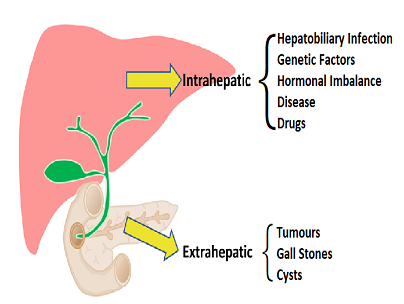
Intrahepatic cholestasis starts inside the liver itself from infections, genetic conditions, hormonal changes (as in pregnancy), or certain medicines that make it hard for the liver to process bile normally.
Extrahepatic cholestasis happens outside the liver usually because gallstones, cysts, or tumours physically block the bile ducts.
Two long-term forms deserve special mention because patients often hear these terms without an explanation: Primary Biliary Cholangitis (PBC), where the body’s own immune system slowly damages small bile ducts, and Primary Sclerosing Cholangitis (PSC), where the bile ducts become scarred and narrowed over time. Both are chronic, both need ongoing specialist monitoring, and both are manageable when caught early.
What Actually Causes Bile Flow to Get Blocked?
The cause can sit inside the liver or block the ducts leading out of it. A few common triggers:
Medications: Anabolic steroids, certain antifungal drugs, amoxicillin, oral contraceptives, and anti-epileptic medicines can all make it harder for the liver to metabolise bile. This is exactly why we ask patients to share their complete medication history, past and present, during consultation.
The risk of drug-induced liver injury extends well beyond prescription medications—commonly used over-the-counter drugs can also place significant stress on the liver, a risk that is frequently underestimated by patients: OTC Drugs and Liver Damage: What to Know covers which non-prescription medications pose the greatest hepatic risk and what patients with existing liver conditions should avoid.
Underlying diseases Hepatitis, HIV, autoimmune conditions, bacterial infections, genetic disorders, and certain cancers all raise the risk.
Structural blockages: Gallstones, cysts, or tumors pressing on the bile ducts from outside the liver.
Genetic and developmental causes in children Conditions like Alagille syndrome or biliary atresia can cause cholestasis from infancy, which is why unexplained jaundice in a newborn should never be dismissed as “just normal baby jaundice” without a check-up.
When Does It Start, and How Serious Can It Get?
Cholestatic liver disease can begin at any age, from newborns to older adults. Left unaddressed, prolonged bile blockage can lead to liver scarring (fibrosis), cirrhosis, and eventually liver failure.
Understanding how fibrosis develops and what each stage means for long-term liver function helps patients appreciate why early intervention matters Fibrosis of the Liver explains the scarring process clearly, from early reversible fibrosis through to advanced cirrhosis, and outlines what the progression means for treatment options.
Watch for these symptoms, which are common to both intrahepatic and extrahepatic forms:
- Persistent itching (often the most distressing symptom)
- Pain in the upper abdomen
- Jaundice yellowing of the skin and eyes
- Unusual fatigue
- Dark-coloured urine
- Nausea
- Pale or clay-coloured stools
If itching keeps you up at night, or your stools turn noticeably pale alongside darker urine, that combination is a signal to get checked promptly, not to wait it out.
How Do Doctors Diagnose Cholestatic Liver Disease?
Diagnosis usually starts with a liver function test, which shows raised bilirubin and alkaline phosphatase levels both classic markers of bile flow trouble. From there, we typically use:
- Blood tests to check liver enzymes and rule out infections or autoimmune markers
- Ultrasound to look for gallstones, cysts, or duct blockages
- MRI or MRCP for a more detailed view of the bile duct system
- Liver biopsy, in select cases, to assess the extent of liver damage
For patients in Pune seeking a structured diagnostic pathway, specialist liver disease services at The Liver Transplant provide the full range of investigations — from initial blood panels to advanced imaging and biopsy — under Dr. Bipin Vibhute’s hepatology team.
The right combination depends on your symptoms, age, and initial test results which is why a proper clinical evaluation matters more than any single test in isolation.
What Are the Treatment Options?
Treatment is built around the underlying cause, and it is rarely one-size-fits-all.
For the itching (pruritus): This is often the symptom that affects quality of life the most. Cholestyramine is usually the first medicine tried, and rifampicin is used when itching doesn’t settle. These medicines work by changing how bile acids are absorbed or processed, and most patients notice real relief within weeks.
For the underlying condition: Depending on the cause, this may include ursodeoxycholic acid to improve bile flow, antibiotics for infection-driven cases, or steroids for autoimmune causes.
For structural blockages: Surgical removal of gallstones or tumours is often curative when caught early.
For advanced disease: When the liver has sustained significant damage, a liver transplant may become the most effective path forward and this is where timely referral to a transplant-experienced surgical team genuinely changes outcomes.
Nutritional support matters too. Since bile helps absorb fat-soluble vitamins, prolonged cholestasis can lead to vitamin A, D, E, and K deficiency, which in turn can weaken bones over time. We routinely check for this and supplement where needed it’s an easy thing to miss if you’re only focused on the liver itself.
The role of vitamins in liver disease extends beyond cholestasis, and understanding which supplements are evidence-supported versus potentially harmful is important for any patient on long-term liver management Role of Vitamins for NASH Treatment covers the clinical evidence on vitamin and antioxidant use in liver disease, with guidance relevant to patients managing chronic hepatic conditions of all types.
How Is Cholestasis Handled During Pregnancy?
Cholestasis in pregnancy, known as Intrahepatic Cholestasis of Pregnancy (ICP), affects roughly 1–2% of pregnant women, usually in the second or third trimester. It typically shows up as intense itching, especially on the palms and soles, often without a visible rash.
This isn’t something to wait out until after delivery. ICP needs prompt evaluation because it can affect the baby’s wellbeing if untreated. Ursodeoxycholic acid is commonly prescribed to ease symptoms and support liver function, and doctors usually monitor the pregnancy more closely once ICP is confirmed.
What Does Long-Term Management and Recovery Look Like?
For structural causes like gallstones, recovery after treatment is often complete. For chronic conditions like PBC or PSC, management is ongoing rather than a one-time fix regular liver function monitoring, medication adherence, and periodic imaging become part of routine care.
Most patients on the right treatment plan live full, active lives. The goal isn’t just to treat a single flare-up; it’s to slow disease progression and protect liver function for the long run.
How Does It Affect Daily Life and Emotional Wellbeing?
Chronic itching that disrupts sleep, ongoing fatigue, and the uncertainty of a long-term liver condition can wear on anyone not just physically, but emotionally. It’s completely normal to feel frustrated or anxious about a condition that doesn’t always show visible progress.
We encourage patients to talk openly about how the condition is affecting daily routines, work, and mood because symptom control (especially of itching and fatigue) often improves emotional wellbeing just as much as it improves lab reports.
Can Cholestatic Liver Disease Be Prevented?
While not every cause is preventable, genetic and autoimmune triggers, for instance, can’t be avoided several risk factors can be managed:
- Limit or avoid alcohol, which adds strain to an already vulnerable liver
- Get vaccinated against Hepatitis A and B
- Avoid recreational intravenous drug use, a known infection risk factor
- Review medications with your doctor, especially if you’re on long-term drug therapy
- Don’t ignore early symptoms like unexplained itching or darker urine early evaluation is your biggest advantage
If you’re experiencing persistent itching, jaundice, or unusual fatigue, our team at Dr. Bipin Vibhute’s, Baner, Pune, can help you get a clear diagnosis and the right treatment plan, whether that means medication, minor surgery, or advanced transplant care when needed.
Final Thoughts
Cholestatic liver disease can feel overwhelming at first, but it’s a condition doctors understand well and manage successfully every day.
Whether the cause is a medication, an infection, gallstones, pregnancy, or a long-term autoimmune condition, the path forward almost always starts with early diagnosis.
With the right combination of medication, lifestyle adjustments, and, when necessary surgical care, most patients go on to protect their liver health for years to come.
FAQs
Does cholestasis go away on its own?
Sometimes, if the cause is temporary (like a medication reaction), it resolves once the trigger is removed but most cases need medical treatment to fully recover.
Is cholestatic liver disease curable without surgery?
Many cases, especially medication-induced or infection-related ones, are fully treatable with medicines alone; surgery is usually reserved for structural blockages like gallstones or tumours.
What happens if bile flow stays blocked for too long?
Prolonged blockage can lead to liver scarring, cirrhosis, and eventually liver failure, which is why early treatment matters.
Can children get cholestatic liver disease?
Yes, conditions like biliary atresia and Alagille syndrome can cause cholestasis from infancy, so unexplained jaundice in babies should always be checked.
Why does cholestasis cause such severe itching?
The buildup of bile acids in the bloodstream irritates nerve endings in the skin, causing itching that can range from mild to intense.
Can cholestatic liver disease come back after treatment?
Chronic forms like PBC and PSC can flare up again, which is why ongoing monitoring is part of long-term care, even after symptoms improve.
Is cholestasis in pregnancy dangerous for the baby?
It can affect the baby if untreated, which is why doctors monitor ICP pregnancies more closely and often recommend closer delivery timing.
What foods should I avoid with cholestatic liver disease?
Very fatty, fried, or heavily processed foods can be harder to digest when bile flow is reduced; a doctor or dietitian can guide a liver-friendly diet suited to your specific case.
Can stress make cholestatic liver disease worse?
Stress doesn’t directly cause bile duct damage, but it can worsen fatigue and disrupt sleep, especially when combined with itching.
When should I see a liver specialist for these symptoms?
If you notice persistent itching, yellowing skin or eyes, dark urine, or pale stools together, it’s time to see a liver specialist rather than waiting to see if it passes.
Written By

Similar Blogs

Kidney Transplant – Common Myths & Facts about Transplantation
Transplantation is a treatment, not a cure. A kidney is an organ that filters waste from the blood and other fluids, and thereby removes it from the body in the form of urine....
Kidney Transplant – Common Myths & Facts about Transplantation
Transplantation is a treatment, not a cure. A kidney is an organ that filters waste from the blood and other fluids, and thereby removes it from the body in the form of urine....