


Liver Biopsy for NASH — What It Involves and Whether You Actually Need One
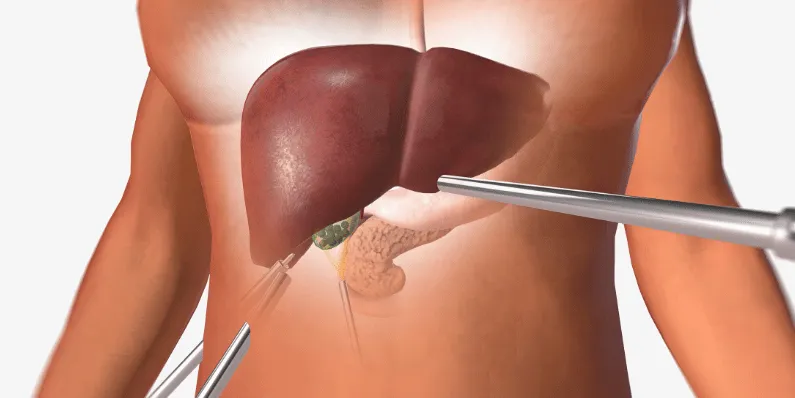
Your doctor has mentioned a liver biopsy. That word alone is enough to make most patients anxious. Is it painful? Is it dangerous? And is there truly no other way?
A liver biopsy remains the definitive test for confirming NASH but it is not always the first step, and it is certainly not needed by every patient.
Understanding when it is truly necessary, what it involves, and what alternatives now exist can replace anxiety with informed clarity.
At The Liver Transplant in Pune, Dr. Bipin Vibhute, Liver and Multiorgan Transplant Surgeon, guides patients through this decision every week and for those seeking expert liver biopsy for NASH in Pune, getting the right guidance before the procedure matters as much as the procedure itself.
Key Takeaways
- A liver biopsy is the gold standard for confirming NASH but not every patient with fatty liver needs one
- Non-invasive tests like FibroScan and blood-based scoring systems can assess liver fibrosis accurately in many cases
- The biopsy procedure itself is short, done under local anaesthesia, and serious complications are rare
- The result tells your doctor how much inflammation and scarring is present and what treatment urgency looks like
- Your specialist uses a combination of clinical factors to decide whether a biopsy is truly necessary for you
Why Is Liver Biopsy Considered the Gold Standard for NASH?
A liver biopsy is the definitive test because NASH is a histological diagnosis meaning it can only be confirmed by examining actual liver tissue under a microscope. No blood test, ultrasound, or scan can replicate what a pathologist sees at the cellular level.
When the tissue sample arrives in the laboratory, the pathologist looks for three specific features: fat accumulation in liver cells, active lobular inflammation (immune cells attacking liver tissue), and hepatocyte ballooning a term for swollen, damaged liver cells that have lost their normal structure.
The presence of all three defines NASH. Fat alone defines simple fatty liver. The distinction between these two is what determines your prognosis and how aggressively you need to be treated.
The NAFLD Activity Score What It Means for You
The pathologist scores each feature on a standardised scale called the NAFLD Activity Score, or NAS. Fat accumulation scores 0 to 3. Lobular inflammation scores 0 to 3. Hepatocyte ballooning scores 0 to 2. A combined score of five or above strongly indicates NASH. A score of two or below suggests the condition is not NASH.
This score also grades liver fibrosis from F0 (no scarring) to F4 (cirrhosis advanced permanent scarring). Knowing your fibrosis stage is clinically important: it determines how urgently intervention is needed and what outcomes are realistic.
What a Biopsy Result Actually Tells You in Practice
Patients sometimes receive a biopsy report and do not understand what it means. A result showing F1 fibrosis with moderate inflammation means early NASH concerning but very manageable with lifestyle intervention.
A result showing F3 fibrosis means significant scarring that requires aggressive metabolic management and close monitoring. F4 means cirrhosis a different clinical conversation entirely.
The report translates directly into a treatment plan and where medication is part of that plan, understanding the role of vitamins in NASH treatment helps patients engage more meaningfully with their full management programme. That is its value.
What Does the Liver Biopsy Procedure Actually Involve?
Many patients fear this procedure more than necessary. Understanding exactly what happens step by step reduces that fear considerably.
Before the Procedure
You will be asked to fast for several hours beforehand. Blood tests are done to check your clotting function, because the liver is a vascular organ and bleeding risk is the primary concern. Your doctor will review any medications you take, particularly blood thinners, which may need to be paused.
An ultrasound is typically performed just before the biopsy to identify the safest point on the liver surface to access avoiding major blood vessels and the gallbladder.
During the Procedure
The procedure is performed under local anaesthesia, meaning the skin and tissue above the liver are numbed. Most patients feel pressure rather than pain.
A thin needle is inserted typically through the right side of the abdomen below the ribcage and a small cylinder of liver tissue, roughly one to two centimetres long, is extracted in a single motion.
The entire needle pass takes less than two seconds. The whole procedure from preparation to completion is typically under 30 minutes.
After the Procedure
You will be monitored for two to four hours for any signs of bleeding or discomfort. Most patients go home the same day. Some experience mild soreness at the puncture site for a day or two.
Serious complications significant bleeding, infection, injury to surrounding organs are rare, occurring in less than one percent of procedures when performed by an experienced specialist.
One important technical point that most patient-facing content omits: sampling error is a genuine limitation of liver biopsy. The needle samples a tiny fraction of the total liver roughly one fifty-thousandth of its volume.
Because fibrosis can be unevenly distributed, a single sample can occasionally underestimate or overestimate disease severity.
This is a known limitation, not a reason to avoid the procedure when it is indicated but it is something patients deserve to know.
For a broader understanding of how fibrosis develops and why accurate staging matters, Fibrosis of the Liver provides useful background on what the scarring process means for long-term liver function.
Is Liver Biopsy the Only Way to Diagnose NASH?
No and this is where the conversation has changed significantly over the past decade.
FibroScan: The Most Practical Non-Invasive Alternative
A FibroScan technically called transient elastography measures how stiff the liver tissue is. Stiffer liver means more fibrosis.
The device sends a mild vibration through the skin and measures how quickly that vibration travels through the liver. The result is expressed in kilopascals (kPa) and maps directly onto the F0 to F4 fibrosis scale.
FibroScan cannot confirm NASH with the same certainty as a biopsy it assesses fibrosis, not inflammation or ballooning. But for many patients, knowing the fibrosis stage is sufficient to guide management without proceeding to biopsy.
It is non-invasive, painless, takes approximately ten minutes, and is now widely available through liver disease specialist services in Pune at centres like The Liver Transplant.
Blood-Based Fibrosis Scores
Several validated blood-based scoring systems including the FIB-4 score and the NAFLD Fibrosis Score combine routine blood test results with clinical variables like age and platelet count to estimate fibrosis probability. These tools are most useful for ruling out significant fibrosis in low-risk patients, reducing the number of biopsies performed unnecessarily.
A low FIB-4 score in a patient with mildly elevated liver enzymes and no metabolic risk factors provides reasonable reassurance that advanced fibrosis is not present.
MR Elastography The Emerging Precision Tool
MR elastography combines magnetic resonance imaging with tissue stiffness measurement. It assesses a much larger proportion of the liver than a biopsy and produces a detailed fibrosis map rather than a single sample point. Research consistently shows it performs comparably to biopsy for staging advanced fibrosis.
It is currently more expensive and less widely available than FibroScan, but it is increasingly being used in specialist centres for patients where non-invasive assessment needs to be particularly precise for example, in clinical trial settings or when FibroScan results are inconclusive.
Who Actually Needs a Liver Biopsy How Does a Specialist Decide?
This is the question patients most need answered, and the honest answer is: not everyone with NASH requires one.
Your specialist will typically recommend a biopsy when the diagnosis remains uncertain after non-invasive testing, when liver enzymes are significantly and persistently elevated without a clear explanation, when FibroScan or blood scores suggest significant fibrosis that would change clinical management, or when you are being considered for a clinical trial or specific treatment protocol that requires histological confirmation.
Knowing which type of specialist to approach in the first place is itself a question many patients get wrong Which Doctor Treats Fatty Liver? clarifies when a general physician is sufficient and when a liver specialist is needed.
Patients with clear metabolic risk factors, elevated liver enzymes, and a FibroScan suggesting early fibrosis but without clinical uncertainty can often be managed and monitored without biopsy, particularly when lifestyle intervention is initiated promptly.
The decision is individualised. A specialist who has reviewed your complete metabolic profile, imaging, and blood results is the only person who can make it accurately.
If you have been told you may need a NASH diagnosis without biopsy assessment, or if you are trying to understand whether a biopsy is actually necessary in your specific case, this decision deserves a specialist’s input not a general reassurance.
Dr. Bipin Vibhute at The Liver Transplant (thelivertransplant.com) offers expert liver assessment in Pune, including FibroScan evaluation, blood-based fibrosis scoring, and clinical consultation on whether a liver biopsy is indicated for your situation. Book a consultation and get a clear, personalised answer.
What Happens After the Biopsy Result? What Comes Next?
The biopsy result is not an endpoint. It is a starting point for a more precise management plan.
An F1 or F2 result with confirmed NASH means structured lifestyle intervention weight loss, dietary change, metabolic control is your treatment.
An F3 result means the same intervention with greater urgency, closer monitoring, and potentially medication support for metabolic comorbidities.
F4 cirrhosis shifts the conversation toward complication surveillance, specialist follow-up every three to six months, and in some cases, transplant evaluation.
For patients at the earlier fibrosis stages, it is also worth understanding the realistic scope of recovery — Can Fatty Liver Be Reversed? covers what reversal actually looks like at each stage and what it realistically requires.
Knowing your stage removes guesswork. It replaces the vague anxiety of “I have a fatty liver” with a specific, actionable clinical picture.
Conclusion: The Biopsy Is a Tool Not a Verdict
A liver biopsy is not a punishment. It is a diagnostic instrument one that, when indicated, provides clarity that no other test can match.
The procedure itself is short, safe in experienced hands, and produces information that directly shapes your treatment. And for many patients, advances in non-invasive testing mean a biopsy may not be required at all.
What matters most is not the specific test it is getting an accurate assessment of your liver’s current status and understanding what that means for your health going forward. That conversation starts with a specialist who looks at the full picture, not just one number on a report.
Frequently Asked Questions
How long does it take to get liver biopsy results?
Results are typically available within five to seven working days, as the tissue sample requires processing and expert pathological review. Your specialist will schedule a follow-up appointment to discuss the findings in detail.
Can I be awake during a liver biopsy?
Yes. A liver biopsy is performed under local anaesthesia you are awake but the area is numbed. Sedation is not routinely required. Most patients report feeling pressure rather than pain during the needle pass.
Will I need a liver biopsy more than once?
Possibly. A repeat biopsy may be recommended after a period of treatment to assess whether fibrosis has improved, particularly if you have been enrolled in a management programme or clinical trial. However, many centres now use FibroScan for follow-up monitoring to reduce the need for repeat biopsies.
Is a FibroScan result always reliable for diagnosing NASH?
FibroScan reliably assesses liver stiffness and fibrosis stage, but it cannot confirm NASH independently it does not detect inflammation or hepatocyte ballooning. Its reliability can also be affected by obesity, recent food intake, and inflammation from other causes. Your specialist will interpret it alongside your blood tests and clinical history.
What should I avoid before a liver biopsy?
You will typically be asked to fast for at least four to six hours before the procedure. Blood-thinning medications including aspirin, warfarin, and certain anti-inflammatory drugs may need to be paused for several days beforehand. Your doctor will give you specific pre-procedure instructions based on your medication list.
Written By

Similar Posts
Sahyadri Hospital Conducts 100th Liver Transplant Op
Source::Times Of IndiaAbout 50% of the pediatric patients who require a liver transplant have biliary atresia. Other disease states that progress to end-stage liver disease among...
Sahyadri Hospiatal Conducts 100th Liver Transplant Op
Source::Times Of IndiaAbout 50% of the pediatric patients who require a liver transplant have biliary atresia. Other disease states that progress to end-stage liver disease among...
Sahyadri Hospital Conducts 100th Liver Transplant Op
Source::Times Of IndiaAbout 50% of the pediatric patients who require a liver transplant have biliary atresia. Other disease states that progress to end-stage liver disease among...