


Medically reviewed by Dr. Bipin Vibhute, Liver and Multi-Organ Transplant Surgeon, Jupiter Hospital, Baner, Pune. Last reviewed: August 2026.
A patient asked me last month whether the curd sitting in her fridge was safe after seeing a video about bacteria in packaged brands.
Hygienic curd comes down to how it’s made, handled, and stored, not simply whether it came from a factory or your own kitchen.
I’m Dr. Bipin Vibhute, Liver and Multi-Organ Transplant Surgeon at Jupiter Hospital, Baner, Pune, and I want to walk you through this properly, because the recent debate around curd hygiene deserves a clearer answer than a thirty-second video can give.
Key Takeaways
- Curd hygiene depends on contamination risk during production, transport, and storage
- Homemade curd can be highly hygienic, but only with clean equipment and proper technique
- Packaged curd undergoes FSSAI oversight, though quality can still vary by brand and format
- Recent social media claims about pouch curd need context before you act on them
- Simple storage habits matter more than which type you choose
What Do We Actually Mean by “Hygienic” Curd?
Hygienic curd is curd that’s free from harmful bacteria, yeast, and mold beyond what’s naturally expected in a fermented product.
- Curd is fermented, so it naturally contains bacteria. The goal isn’t zero bacteria, it’s keeping out the harmful kinds — and supporting the good ones, since a well-balanced gut plays a real role in overall digestive and liver health. For more everyday habits that support this, see our guide on natural ways to repair your gut health.
- Hygiene issues typically show up as contamination from unwashed hands, dirty containers, unclean milk, or storage at the wrong temperature
- A curd that smells sharply sour, has visible mold, or shows separated liquid on top has usually crossed from “fermented” into “spoiled”
What Causes Curd to Get Contaminated in the First Place?
Contamination happens when bacteria other than the intended starter culture get a chance to grow, and this can occur at home or during commercial production.
- Unclean vessels: A container that wasn’t washed properly can carry bacteria that compete with or overpower the healthy fermentation process
- Wrong temperature: Curd left to set in a place that’s too warm or too cool can allow unwanted microbes to establish themselves alongside the good bacteria
- Old or weak starter culture: Reusing curd that’s already a few days old as your starter increases the chance of introducing bacteria that shouldn’t be there
- Storage after setting: Leaving curd out at room temperature for extended periods, especially in warm weather, is one of the most common contamination points, whether it’s homemade or store bought
Why Did the Packaged Curd Hygiene Debate Blow Up Recently?
A social media comparison video claimed that pouch-packed curd from a well-known brand showed higher levels of coliform bacteria, yeast, and mold than cup-packed versions, exceeding FSSAI limits.
- The brand named in that video publicly stated its products, in both pouch and cup formats, comply with FSSAI standards and are produced in ISO-certified facilities
- I’d treat unverified social media testing with some caution. It raises a fair question, but it isn’t the same as an official lab audit, and no peer-reviewed or government-published data has confirmed the claims at the time of writing
- What the episode does highlight, fairly, is that packaging format and shelf handling can affect hygiene outcomes, which is worth knowing regardless of which brand is involved
How Is Curd Tested and Regulated for Safety?
In India, curd falls under FSSAI’s microbiological standards, which set limits for coliform count, yeast and mold count, and total plate count.
- Coliform count indicates whether fecal contamination or poor handling has occurred somewhere in the production chain
- Yeast and mold count affects both safety and shelf life, and higher counts usually mean the product won’t stay fresh as long as labeled
- These standards apply at the manufacturing level under FSSAI’s Food Safety and Standards Regulations, and compliant brands carry FSSAI license numbers on their packaging, which is worth checking if you want reassurance
- Homemade curd isn’t tested this way, so its hygiene depends entirely on how carefully you make and store it
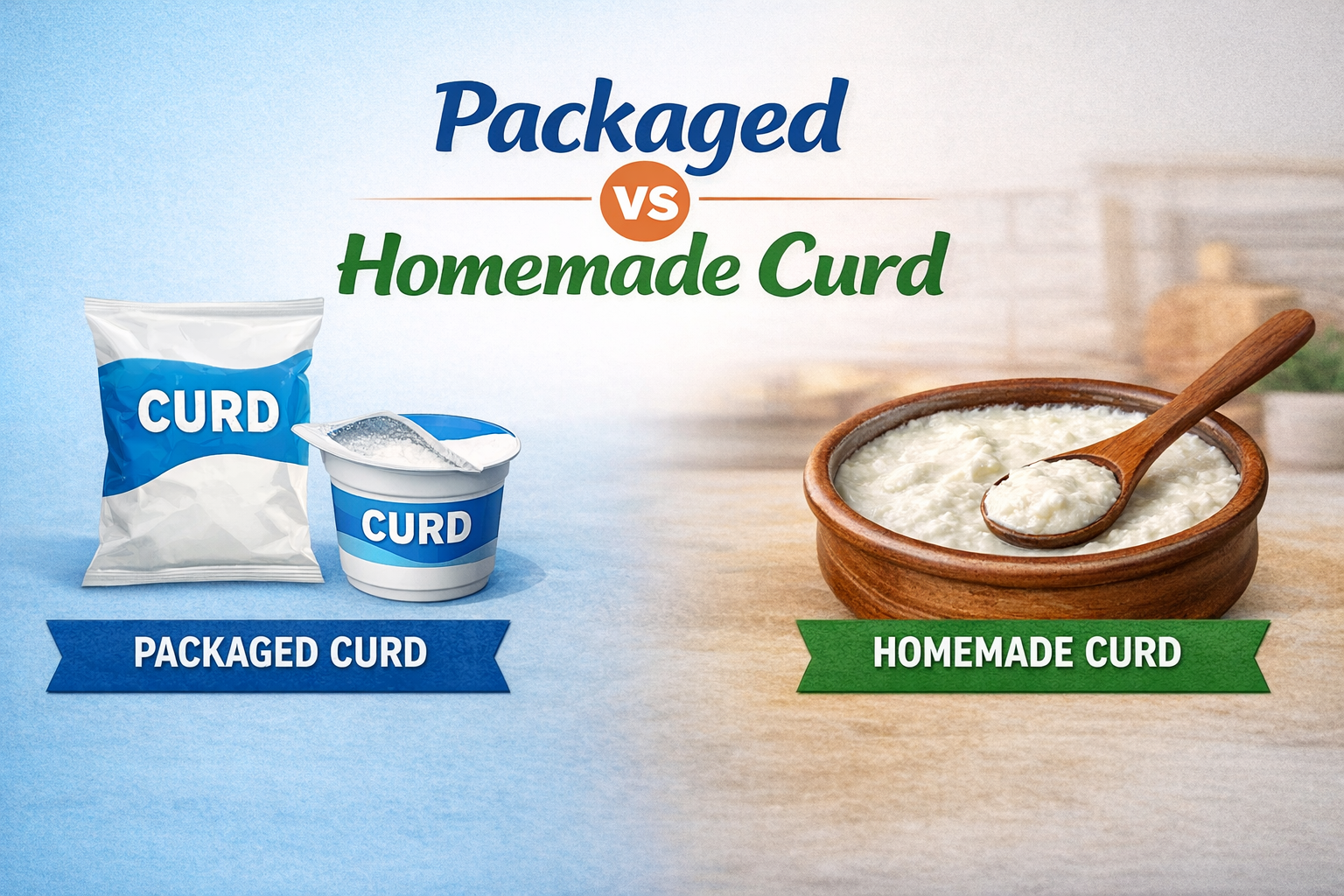
Homemade or Packaged: Which Is Actually More Hygienic?
| Homemade Curd | Packaged Curd | |
| Contamination risk | Depends entirely on your hygiene practices | Regulated, but format and transport handling matter |
| Oversight | None, self-managed | FSSAI standards apply at the plant level |
| Consistency | Varies batch to batch | More consistent across batches |
| Shelf life | Best consumed within a day or two | Extended, though quality can dip closer to expiry |
| Biggest risk factor | Dirty vessels or improper storage | Pouch formats have drawn more contamination concerns than cups in recent testing |
Neither option is automatically safer. A carefully made bowl of homemade curd, refrigerated promptly, is genuinely hygienic. A well-stored, FSSAI-compliant packaged curd from a trusted brand is also a reasonable choice.
The risk in both cases comes down to handling, not the format itself. If you’re also weighing the two on nutritional grounds rather than just safety, our companion piece on packaged curd vs homemade curd and which is healthier looks at the probiotic and health side of this same question.
How Do You Store and Handle Curd Safely at Home?
A few habits reduce contamination risk regardless of which type of curd you’re eating.
- Boil milk and let it cool to a lukewarm temperature before adding your starter culture. Milk that’s too hot kills the good bacteria, milk that’s too cold won’t ferment properly
- Use a clean vessel every time, and avoid touching the curd or milk with unwashed hands
- Refrigerate curd as soon as it sets, rather than leaving it out for hours after fermentation is complete
- Finish homemade curd within one to two days for the best safety and probiotic value
- For packaged curd, check the manufacturing date, not just the expiry date, and keep it refrigerated from the moment you bring it home
.If you’re managing a liver condition, gut hygiene matters more than most patients realize, since a healthy gut lining reduces the toxin load your liver has to filter. This is especially relevant if fatty liver is part of your diagnosis — my article on whether fatty liver can be reversed through treatment and lifestyle changes covers how everyday habits like this one fit into a broader treatment plan. I’d encourage you to consult our team at Jupiter Hospital, Baner, Pune, at +91-70530 70531, if you want a diet plan that accounts for your specific liver reports rather than general advice.
Final Thoughts
The honest answer here is that neither homemade nor packaged curd wins automatically on hygiene. What decides it is how the curd was made, handled, and stored before it reached your bowl.
If you’re making curd at home, clean equipment and prompt refrigeration go a long way. If you’re buying packaged curd, stick to trusted brands, check dates, and keep it cold. That’s a more useful takeaway than any single viral video.
FAQs
Can old curd make you sick?
Yes, curd that’s been left out too long or kept past its safe window can carry harmful bacteria that cause stomach upset, so trust your nose and eyes over the calendar alone.
Does packaged curd have preservatives?
Some brands add stabilizers or thickeners to maintain texture over a longer shelf life, though this varies by product, so it’s worth checking the ingredient label.
Is it safe to eat curd past its expiry date?
It’s best avoided, since bacterial growth continues even in refrigerated curd, and expiry dates account for that safety margin.
Why does homemade curd sometimes turn watery?
That’s usually whey separating out, which happens naturally with age or slightly higher fermentation temperatures, and it’s not necessarily a sign of contamination on its own.
Can I trust FSSAI-certified brands completely?
FSSAI certification means the brand meets defined safety standards at the manufacturing level, which is a meaningful baseline, though proper storage after purchase still matters.
Is cup-packed curd genuinely safer than pouch-packed curd?
Recent testing referenced in social media suggested this, though it wasn’t an independent lab audit, so I’d treat it as a reasonable precaution rather than a confirmed rule.
How can I tell if my homemade curd has gone bad?
Watch for an unusually sharp sour smell, visible mold, or a slimy texture, any of which means it’s time to discard it.
Does boiling milk longer make curd more hygienic?
Boiling kills harmful bacteria in the raw milk, but the real hygiene factor after that is how clean your vessel and hands are during the setting process.
Is it safe to use packaged curd as a starter for homemade curd?
Yes, this is common practice and generally safe, as long as the packaged curd itself is fresh and has been stored properly.
Should people with liver disease be extra cautious about curd hygiene?
It’s a reasonable precaution, since a compromised gut lining can add strain to an already stressed liver, so I’d recommend sticking to fresh, well-stored curd rather than anything questionable, and to speak with your doctor if you’re unsure.
This article covers general food safety information and isn’t a substitute for personal medical advice. If you’ve eaten curd and are experiencing symptoms like vomiting, fever, or persistent stomach pain, please see a doctor rather than relying on this guide.
Recent Comments