


Fatty liver is not a permanent condition — and yes, it can be reversed when addressed at the right time.
As a hepatology specialist in Pune, Dr. Bipin Vibhute and our liver care team regularly see patients who walk in anxious after a routine ultrasound report showing fat accumulation in the liver.
The reassuring truth is that fatty liver treatment is far more achievable than most patients expect — especially in early stages — without surgery, without heavy medication, and without drastic lifestyle overhauls overnight.
Early-stage fatty liver responds remarkably well to the right combination of diet, exercise, and guided medical support. The earlier you act, the better your liver’s chances of complete recovery.
Key Takeaways
- Fatty liver in early stages is fully reversible with consistent lifestyle changes
- Losing 7–10% of body weight significantly reduces liver fat and inflammation
- Sugar and refined carbohydrates — not dietary fat — are the primary drivers of fat buildup in the liver
- The Mediterranean diet is the most evidence-backed eating pattern for liver recovery
- Ignoring fatty liver allows it to silently progress to cirrhosis, liver failure, or liver cancer
- Regular monitoring with a hepatology specialist is essential to track real improvement
What Exactly Is Fatty Liver and Why Should You Take It Seriously?
Fatty liver disease, medically known as Non-Alcoholic Fatty Liver Disease (NAFLD) — now also called MASLD (Metabolic dysfunction-Associated Steatotic Liver Disease) — occurs when excess fat builds up inside liver cells.
In its earliest stage, called simple steatosis, the liver still functions normally. But the real danger lies in what happens next if the condition is ignored.
Left unmanaged, fatty liver silently progresses to Non-Alcoholic Steatohepatitis (NASH), a more serious stage involving active liver cell inflammation and damage.
From there, the path leads toward liver fibrosis, cirrhosis, and in advanced cases, end-stage liver disease that may require a liver transplant.
The most alarming part? Most people experience zero symptoms until the damage is already severe.
According to a peer-reviewed meta-analysis published on NIH/PubMed, approximately 1 in 3 adults in India is estimated to have NAFLD, with prevalence ranging between 9–32% in the general Indian population and significantly higher in urban, high-risk groups.
This is no longer a condition exclusive to heavy drinkers or the severely obese.
Sedentary professionals, people with diabetes, and even young adults in cities across Maharashtra are increasingly being diagnosed with fatty liver through routine health checkups.
Can Fatty Liver Actually Be Reversed, or Is It Permanent?
Yes — fatty liver can absolutely be reversed, provided it has not yet progressed to advanced fibrosis or cirrhosis.
The liver is one of the few organs in the human body with a powerful capacity for regeneration and self-repair when given the right environment to heal.
Simple fatty liver and early NASH are both reversible with sustained and consistent lifestyle modification.
However, once scarring becomes advanced or cirrhosis sets in, the damage becomes irreversible — shifting the focus from reversal to liver cirrhosis management and complication prevention.
This is precisely why early detection is the most important step. A fatty liver report is your liver sending you a signal. How you respond to that signal determines everything that follows.
What Are the Real Causes of Fatty Liver That Most People Don’t Know?
Most people assume dietary fat causes fatty liver. This is one of the most widely held and damaging misconceptions in hepatology treatment.
The primary driver of fat accumulation in the liver is actually excess sugar and refined carbohydrates.
When you consume high amounts of sugar, white rice, maida-based foods, or packaged snacks, the liver converts the resulting excess blood sugar into fat — storing it within liver cells. Over time, this leads to measurable fat buildup visible on ultrasound.
Other significant causes include:
- Insulin resistance and type 2 diabetes — the liver mirrors metabolic dysfunction directly
- Obesity, especially central abdominal fat accumulation
- Hypothyroidism and hormonal imbalance
- Rapid or crash weight loss, which paradoxically floods the liver with free fatty acids
- Certain medications — steroids, methotrexate, tamoxifen, and some antidepressants
- Alcohol consumption, even in moderate amounts, significantly worsens fat buildup in an already vulnerable liver
In our liver care practice, many patients from Pune and surrounding areas including Nashik who come for evaluation are genuinely surprised to discover that their daily intake of sweetened chai, white bread, packaged biscuits, and fruit juices — not their cooking oil — was the silent driver of their condition.
What Does the Right Diet for Reversing Fatty Liver Look Like?
Diet is the single most powerful tool available for non-alcoholic fatty liver disease treatment. Here is what the evidence consistently supports:
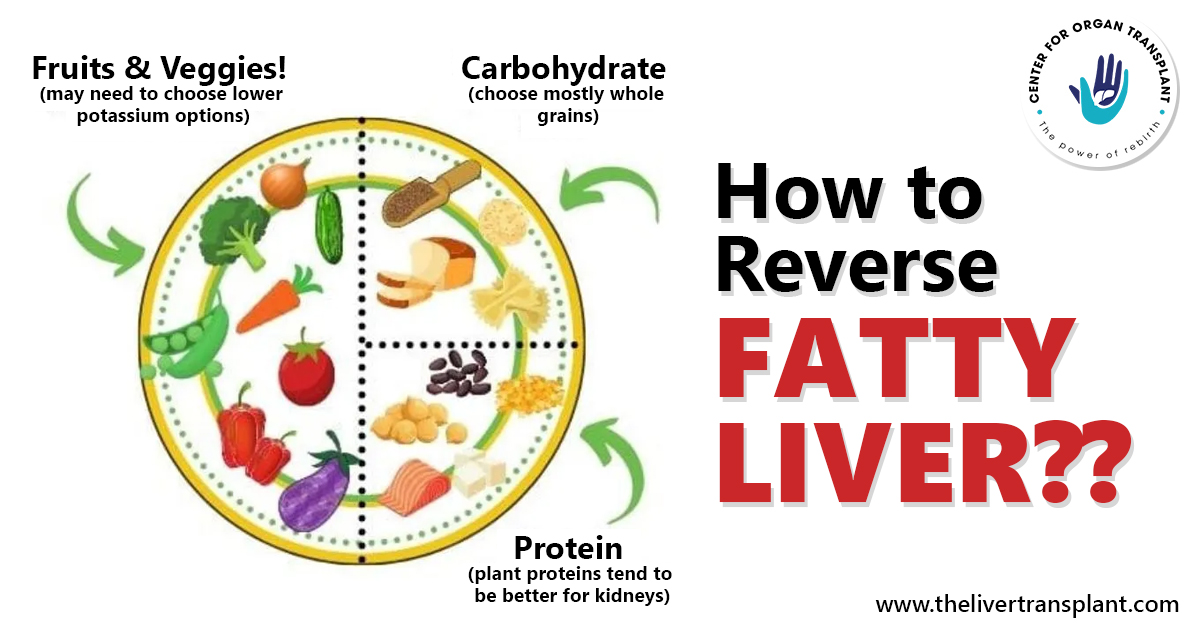
Follow the Mediterranean Diet pattern. This means prioritising fruits, vegetables, whole grains, legumes, nuts, olive oil, and fish — while reducing red meat, fried foods, and added sugars.
Multiple clinical studies confirm this eating pattern reduces liver fat, inflammation, and associated metabolic risks. Even without weight loss, the Mediterranean diet alone produces measurable improvement in liver health.
Eliminate hidden sugars. Sugars hide in yogurt, protein shakes, breakfast cereals, packaged fruit juices, ketchup, and granola bars.
Reading nutrition labels carefully is not optional — it is essential. Replace sugary beverages with water, plain buttermilk, or unsweetened green tea.
Include these liver-friendly foods daily:
- Cruciferous vegetables — broccoli, cauliflower, cabbage, and methi (fenugreek) actively support fat metabolism in the liver
- Walnuts and flaxseeds — rich in omega-3 fatty acids shown to reduce liver inflammation
- Turmeric (curcumin) — has demonstrated anti-inflammatory and hepatoprotective effects on liver cells in published research
- Black coffee — 2–3 cups of plain black coffee daily is associated with reduced liver scarring risk and lower liver enzyme levels across multiple hepatology studies
- Olive oil — four tablespoons daily has shown measurable improvement in liver enzyme levels in NAFLD patients
Strictly avoid: sugary drinks, all forms of alcohol, processed meats, deep-fried snacks, excess white rice, and all refined flour products.
How Much Weight Loss Is Actually Needed to See Liver Improvement?
You do not need dramatic weight loss to see real liver recovery. Research endorsed by the American Association for the Study of Liver Diseases (AASLD) confirms that losing 7–10% of total body weight significantly reduces liver fat accumulation and inflammation. Even losing just 5% of body weight leads to measurable reduction in liver fat visible on imaging.
For a person weighing 80 kg, that means losing just 5.5–8 kg gradually — achieved through a sustainable calorie reduction of 500–1,000 calories per day combined with regular physical activity.
One critical caution: rapid weight loss of more than 1.5 kg per week can actually worsen fatty liver disease by flooding the bloodstream with excess free fatty acids. Slow, steady, and consistent weight loss — guided by a specialist — is the medically correct approach for lasting liver disease treatment.
Patients travelling to Pune from Solapur, Latur, or Sangli for liver evaluation frequently ask us whether crash diets work faster. The honest answer is they often cause more liver harm than good. Sustainable change always wins.
Worried about your liver health report? Our team offers expert liver evaluation, FibroScan assessment, and personalised fatty liver management at our liver care centre in Pune. Book a consultation with Dr. Bipin Vibhute today
What Role Does Exercise Play in Reversing Liver Fat?
Exercise works directly on liver fat — even independent of weight loss. Studies published in peer-reviewed journals confirm that regular physical activity reduces hepatic fat by improving insulin sensitivity and increasing the liver’s capacity to burn stored fat for energy, regardless of scale changes.
We recommend the following combination approach for our patients:
Aerobic exercise — brisk walking, cycling, or swimming for at least 150 minutes per week. This directly and measurably reduces liver fat content.
Resistance training — weightlifting or bodyweight exercises 2–3 times weekly. Building muscle mass improves insulin sensitivity, which reduces the liver’s fat storage signals at a hormonal level.
Even a consistent daily 30-minute brisk walk, maintained over 3–6 months, produces visible improvements in liver enzyme levels (ALT and AST) and ultrasound findings in our patient follow-ups.
Are There Stages of Fatty Liver — And Does the Stage Affect Reversal?
Yes. Fatty liver progresses in defined stages, and understanding your current stage determines both urgency and the approach needed:
| Stage | Condition | Reversible? |
| Stage 1 | Simple Steatosis (fat only) | Fully reversible |
| Stage 2 | NASH (fat + inflammation) | Reversible with sustained effort |
| Stage 3 | Fibrosis (early scarring) | Partially reversible |
| Stage 4 | Cirrhosis (advanced scarring) | Not reversible — management focused |
| End Stage | Liver failure | May require liver transplant |
As a liver specialist in Pune, we emphasise one point consistently to every patient: the gap between Stage 1 and Stage 3 is often just a matter of years — and sometimes less. Post-transplant care and transplant evaluation become necessary only when earlier stages are ignored long enough.
This is why we treat every fatty liver report seriously, and why patients coming from Kolhapur for a second opinion are encouraged not to delay their evaluation.
What About Supplements — Do They Actually Help Fatty Liver?
This is an area where we strongly urge caution. The supplement market is flooded with “liver detox” and “liver cleanse” products — the majority of which carry no credible scientific backing. The liver is already the body’s primary detoxification organ and does not require external cleansing.
That said, a few compounds show genuine evidence in peer-reviewed hepatology research:
- Vitamin E — shown to reduce liver inflammation in non-diabetic NASH patients in clinical trials
- Omega-3 fatty acids — evidence supports reduction in liver fat content in NAFLD patients
- Silymarin (Milk Thistle) — multiple meta-analyses show hepatoprotective benefits in end-stage liver disease treatment prevention
Always consult your hepatologist before starting any supplement, particularly if you are already on diabetes, thyroid, or blood pressure medications — as interactions can affect liver enzyme levels.
How Long Does It Take to Reverse Fatty Liver?
With consistent lifestyle changes, most patients see improvement in liver enzyme levels within 8–12 weeks. Ultrasound improvement showing reduced liver fat typically takes 3–6 months. Full reversal of early-stage fatty liver is achievable within 6–12 months of sustained, guided effort.
For alcoholic fatty liver, stopping alcohol completely can bring measurable liver improvement within 4–8 weeks — one of the fastest turnarounds we see in liver disease treatment in Pune.
The timeline always depends on your starting stage, how consistently you follow the recommended plan, and whether underlying conditions like diabetes or thyroid disease are being managed alongside liver care.
At our practice, we monitor progress with periodic liver function tests, FibroScan assessments, and ultrasound follow-ups so every patient sees their real numbers improve over time.
How Is Fatty Liver Diagnosed — Do You Need a Biopsy?
Not always. Many patients referred to us for fatty liver diagnosis in Pune are concerned about needing a liver biopsy. While a biopsy remains the gold standard for confirming NASH and grading fibrosis accurately, non-invasive tools have advanced significantly.
FibroScan (transient elastography) measures liver stiffness and fat content without any needle or incision. Combined with liver function blood tests (ALT, AST, GGT) and abdominal ultrasound, it gives us a clear picture of where your liver stands and what level of intervention is needed.
Your specialist will determine whether a biopsy is needed based on your individual clinical picture, imaging findings, and blood work patterns.
Conclusion
Fatty liver is your liver’s way of asking for help — not a condition to dismiss or manage with a quick-fix supplement. The liver’s remarkable capacity to heal itself means that with the right non-alcoholic fatty liver disease treatment approach, reversal is genuinely possible for the vast majority of patients in early and intermediate stages.
At the liver care practice of Dr. Bipin Vibhute, our team provides comprehensive hepatology treatment in Pune — from initial FibroScan evaluation to personalised diet planning, medical management, and long-term liver health monitoring. Whether you are based in Pune or travelling from Kolhapur, Sangli, or Latur seeking expert guidance, we are here to help you understand your liver report and take the right steps forward.
The most important step? Don’t wait for symptoms. Act on the report in your hand today.
Frequently Asked Questions
- Can fatty liver cause pain or discomfort? Most people with fatty liver experience no pain at all — which is what makes it so deceptively dangerous. A small number of patients report mild discomfort or heaviness in the upper right abdomen, but this is not a reliable indicator of severity. The absence of pain does not mean the liver is healthy. Regular ultrasound monitoring is the only reliable way to track liver health.
- Is it safe to try intermittent fasting with fatty liver? Intermittent fasting can improve insulin sensitivity and reduce liver fat when done correctly. However, aggressive fasting or very long fasting windows can worsen liver health by releasing large amounts of fatty acids into the bloodstream rapidly. Always consult a hepatologist before starting any fasting protocol if you have a known liver condition.
- Can children and teenagers develop fatty liver? Yes. Paediatric NAFLD is a growing concern in India, particularly among children with obesity or a family history of diabetes. A meta-analysis from India estimates NAFLD prevalence in obese children at over 63%. Fatty liver in young people is directly linked to poor dietary habits, screen time-driven sedentary behaviour, and rising rates of childhood insulin resistance.
- Does stress affect fatty liver disease? Yes — chronic stress raises cortisol levels, which worsens insulin resistance and promotes abdominal fat accumulation, both of which directly drive fatty liver progression. Stress management through regular sleep, mindfulness, and physical activity is a medically supported component of comprehensive fatty liver care — not just an add-on.
- What blood tests should I monitor if I have fatty liver? The key markers to monitor regularly include ALT (Alanine Aminotransferase), AST (Aspartate Aminotransferase), GGT (Gamma-Glutamyl Transferase), fasting blood sugar, HbA1c, lipid profile, and platelet count. Your hepatologist will advise on frequency based on your current stage and whether you are actively reversing the condition or in a stable monitoring phase.
Recent Comments