

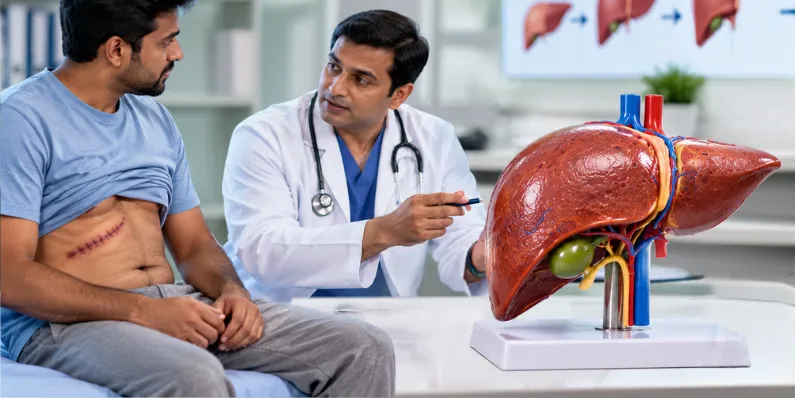
A living liver donor needs time to heal after surgery, even though the liver can regenerate naturally.
If you’re considering donation or helping a family member through a transplant, understanding liver donor recovery time can help you plan for rest, work and follow-up care.
At Jupiter Hospital in Pune, liver transplant assessment and recovery planning should be guided by the donor’s individual health and surgical findings.
Key Takeaways
- Most liver donors need several weeks to recover, with many returning to regular activities in around six to eight weeks.
- The remaining liver begins regenerating soon after surgery and usually regains its usual volume within about two to three months.
- Liver regeneration does not mean the abdominal incision and internal tissues have fully healed.
- Returning to work, driving, lifting and exercise depends on recovery progress and medical clearance.
- Fatigue and discomfort can continue after hospital discharge.
- Follow-up appointments are essential for monitoring liver function and identifying possible complications.
How long does it take to recover after donating part of your liver?
Most living liver donors need approximately six to eight weeks to resume many regular activities, although full recovery can take longer. The exact timeline depends on your health, the surgical approach, your progress after surgery and the physical demands of your daily routine.
What happens during the recovery period?
- First week: You will usually remain in the hospital for around five to seven days. Your team will monitor pain, liver function, eating, mobility and signs of complications.
- Weeks two to four: You gradually become more independent at home, although fatigue, abdominal discomfort and reduced stamina may persist.
- Weeks four to eight: Many donors increase their daily activities and may return to work, depending on their recovery and job requirements.
- After eight weeks: Some donors still need additional time before resuming strenuous exercise, heavy lifting or physically demanding work.
These are general estimates, not deadlines. Your transplant team should determine when you can safely resume each activity.
Does the liver grow back after a living donor transplant?
Yes. The remaining liver tissue in the donor grows after surgery, and the transplanted portion can also grow in the recipient. This ability is called liver regeneration after donation and makes living-donor liver transplantation possible.
The liver has a remarkable capacity to restore its volume and function. When a surgeon removes a portion for transplantation, the liver tissue left in the donor begins adapting and growing to meet the body’s needs.
However, the liver does not recreate the exact removed portion in its original shape. Instead, the remaining tissue grows and adapts.
Regeneration also does not mean the entire body has recovered from surgery. Your abdominal incision, muscles and other tissues still need time to heal.
How long does the liver take to grow back after donation?
The liver begins regenerating soon after surgery and usually regains much of its usual volume within approximately two to three months. The pace and extent of recovery vary between individuals.
The liver regeneration process is particularly active during the early weeks after surgery. Liver cells grow and adapt to help restore the organ’s size and capacity.
Your transplant team may use blood tests and imaging when clinically indicated to monitor recovery. A multicentre study funded by the NIH, summarised in the NIDDK research repository, tracked liver regrowth in living donors and recipients and found that the donor’s liver volume and remnant size influence how quickly regeneration happens.
Remember that liver volume, liver function and physical recovery are related but different measures. A liver that is regenerating normally does not automatically mean you are ready for heavy lifting, running or strenuous exercise.
What happens during each stage of liver donor recovery?
Recovery progresses from hospital monitoring to independent daily activities and, eventually, a gradual return to your usual routine. Your experience may differ from the timeline below.
- During the first week: Nurses and doctors monitor your condition, manage pain and encourage movement as appropriate. You gradually begin eating, drinking and walking.
- During weeks two to four: You may still need rest periods and help with cooking, shopping, childcare or household tasks.
- During weeks four to eight: Stamina often improves, and you may be able to increase routine activities if your recovery is uncomplicated.
- After two months: You may feel closer to your usual self, but some people need longer to regain their previous energy and strength.
This liver donor recovery timeline is a general guide. Complications, existing health conditions and the type of surgery can extend recovery.
When can a liver donor return to work, driving and exercise?
You can return to these activities only when your recovery and transplant team’s advice indicate that it is safe. The timing depends on pain, mobility, medication use and the demands of each activity.
- Returning to work: Desk-based work may be possible before physically demanding work. Many donors need several weeks away from work, and some need two to three months before resuming their usual duties.
- Driving: Do not drive while taking sedating pain medicines or if pain, weakness or restricted movement prevents you from controlling the vehicle safely. Ask your surgical team for clearance.
- Lifting: Avoid heavy lifting until your team confirms that your abdominal tissues have healed sufficiently. Follow the specific weight limits and duration provided at discharge.
- Exercise: Gentle walking is commonly encouraged during early recovery. Running, weight training and abdominal exercises should wait until your surgeon approves them.
If your job involves manual labour, prolonged standing or carrying heavy loads, discuss a phased return with your team. Do not use liver regrowth alone as a reason to resume strenuous activity.
What symptoms are normal during recovery, and when should you seek help?
Some abdominal discomfort, tiredness and reduced stamina are expected after major surgery, but worsening or severe symptoms need medical assessment. Your symptoms should generally improve as recovery progresses.
During postoperative recovery, you may experience:
- Pain or tenderness around the incision.
- Tiredness and a need for more sleep.
- Temporary changes in appetite.
- Reduced ability to perform your usual activities.
Contact your transplant team promptly if you develop a fever, increasing abdominal pain, redness or discharge around the wound, persistent vomiting or yellowing of the eyes or skin.
Seek emergency medical attention for severe breathing difficulty, chest pain, fainting or other sudden, severe symptoms. Do not wait for a routine follow-up if you are concerned about a possible complication.
Living liver donation is major surgery. Possible complications include infection, bleeding, blood clots and problems involving bile ducts. Your transplant team should explain the relevant risks before you make a decision about donation.
What can help you recover safely at home?
Following your discharge instructions, increasing activity gradually and attending follow-up appointments are central to safe recovery. You should not feel that you have to manage everything independently immediately after leaving the hospital.
Practical steps include:
- Walk regularly as advised: Short, frequent walks can help you gradually rebuild mobility. Increase activity according to your tolerance and medical guidance.
- Eat balanced meals: Include adequate protein and other nutrients through a balanced diet, unless your team recommends specific dietary changes.
- Drink enough fluids: Follow your care team’s advice, particularly if you have another condition that affects fluid intake.
- Protect your incision: Keep the wound clean and follow the dressing and bathing instructions you receive.
- Arrange help at home: Ask family or friends to assist with lifting, shopping, cooking and childcare during early recovery.
- Take medicines as prescribed: Check with your team before starting new medicines or supplements.
- Attend scheduled reviews: Blood tests and other assessments help monitor healing and liver function.
Your donor follow-up care remains important even if you feel well. If you live outside Pune, ask the transplant team whether you need to stay nearby after discharge and how your follow-up appointments should be arranged.
Can donating part of your liver affect your long-term health?
Many donors return to their usual lives after recovery, but donation is not risk-free and long-term follow-up remains important. Your individual risk depends on your health, surgical findings and whether complications occur.
Before donation, the transplant team evaluates your medical history, liver health, anatomy and suitability for surgery. For how that assessment works, see Liver Transplant Eligibility: Who Qualifies and Which Tests Are Done? For common worries donors raise, Living Liver Donor Myths and Realities separates fact from fear.
After surgery, report persistent pain, ongoing digestive problems, unusual fatigue or other symptoms that concern you. Your team can assess whether these are part of recovery or require further investigation.
It is also normal to have questions or mixed emotions before and after donation. Family support and access to appropriate psychological guidance can help you manage the adjustment.
Your decision to donate should be voluntary and informed. You should have an opportunity to discuss the risks, recovery demands and alternatives with the donor care team without pressure from family members or the intended recipient.
Frequently Asked Questions
- Can the liver grow back completely after donation?
The remaining liver usually regains its usual volume within about two to three months. Regrowth does not mean the removed portion returns in exactly the same shape, and recovery varies between donors.
- Will I feel tired for months after donating part of my liver?
Some donors experience fatigue for several weeks or longer, even as liver volume recovers. If tiredness persists, worsens or affects daily activities, contact your transplant team for assessment.
- Can I return to the gym after liver donation surgery?
Yes, many donors return to exercise gradually, but the timing depends on healing and medical clearance. Walking is usually introduced early, while weight training and strenuous abdominal exercises require specific approval.
- Will donating part of my liver shorten my life expectancy?
Donation does not necessarily shorten a donor’s life, but individual outcomes cannot be guaranteed. Discuss the known short- and long-term risks with the independent donor team before deciding.
- Will I need medicines for the rest of my life after donating?
Not every donor needs lifelong medication because of donation itself. You may need temporary pain relief or other treatment, depending on your recovery and any medical conditions.
- Can I travel after liver donation surgery?
Travel may be possible after the early recovery period, but timing depends on your condition, the distance and access to medical care. Ask your transplant team before making travel plans, especially if you live far from the surgical centre.
- Will I have a permanent scar after liver donation?
A surgical scar usually remains, although its appearance changes as it heals. Its size and location depend on the surgical approach used.
- Can I donate part of my liver if I have fatty liver?
Not everyone with fatty liver will be eligible to donate. The transplant team must assess liver health, the degree of fat accumulation and other medical findings before deciding whether donation is appropriate.
- Can I drink alcohol after donating part of my liver?
You should avoid alcohol during recovery and follow your transplant team’s advice about longer-term use. Ask your doctor when, or whether, drinking is appropriate for your circumstances.
- Is living liver donation safe for the donor?
Living liver donation can be performed safely in appropriately selected donors, but it involves major surgery and carries risks. A thorough independent evaluation and informed consent are essential before proceeding.
For people planning living liver donor recovery, Dr. Bipin Vibhute, Liver & Multiorgan Transplant Surgeon, is associated with liver transplant care at Jupiter Hospital in Pune. . An assessment can help clarify donor suitability, expected recovery milestones, follow-up requirements and the precautions needed after surgery, based on individual clinical findings.
Final Thoughts
The liver can regenerate after living donation, but your body still needs time to heal from surgery. Give yourself time to recover, follow your transplant team’s instructions and attend every recommended follow-up appointment. Your recovery should be guided by your health and progress, not by someone else’s timeline.
Medical disclosure:
This article is for general educational purposes only. It does not replace an individual medical consultation, physical examination, diagnosis or personalised treatment plan.
Recent Comments