


Vomiting blood is frightening, and families usually want two answers quickly: can the bleeding be stopped, and does this mean a transplant?
The treatment for bleeding oesophageal varices starts as an emergency, with medicines and an urgent camera test to seal the bleeding vein, and a liver transplant is advised only when the liver disease underneath is advanced, not after every bleed.
As a liver and multiorgan transplant surgeon at Jupiter Hospital, Baner, Pune, I explain to families that the bleed and the liver are two separate problems, and both need a plan.
Key Takeaways
- Variceal bleeding is a medical emergency. Vomiting blood or passing black stools means going to hospital at once.
- Most bleeds are controlled with medicines, antibiotics and endoscopic banding, without surgery.
- A TIPS (a small stent placed through a neck vein) is used when bleeding won’t stop or returns, and sometimes early in high-risk patients.
- A transplant is considered when cirrhosis is advanced, bleeding keeps recurring, or liver function is poor. A bleed alone doesn’t mean transplant.
- After a bleed, early assessment by a transplant team is worthwhile, even if you never need a transplant.
What are oesophageal varices, and why do they bleed?
Oesophageal varices are swollen veins in the lining of the food pipe (oesophagus). They form when pressure in the liver’s blood supply rises.
In cirrhosis, scar tissue blocks blood flowing through the liver. Blood looks for detours, and some of it goes through thin-walled veins in the oesophagus and upper stomach.
These veins stretch under the extra load and can burst. This rise in pressure is called portal hypertension, and our earlier post explains how it develops.
Most patients feel nothing until the first bleed. Not everyone with varices will bleed, but larger varices carry a higher risk. Liver cirrhosis is the most common cause, though clots in the portal vein can do the same.
What should you do if someone with cirrhosis vomits blood?
Get them to an emergency department straight away. Families often ask me what to do if someone vomits blood with cirrhosis, and the answer is not to wait and see.
Warning signs include:
- Vomiting blood, either bright red or like coffee grounds
- Black, tarry stools
- Dizziness, fainting or a racing heartbeat
- Pale, cold, clammy skin
- Sudden confusion
While arranging transport, call an ambulance (112 in India) instead of driving yourself. Give no food, drink or medicines. Lay the person on their side so blood doesn’t enter the lungs. Choose a hospital with endoscopy and ICU support where you can.
How do doctors stop the bleeding in hospital?
Doctors first stabilise the patient, then seal the bleeding vein through an endoscope.
- What happens in the first few hours?
The team restores blood volume carefully, because over-transfusing can raise portal pressure. You’ll usually receive a medicine such as octreotide or terlipressin to lower pressure in the veins, plus antibiotics, since infections are common after a bleed and make recovery harder.
- How does endoscopy and banding work?
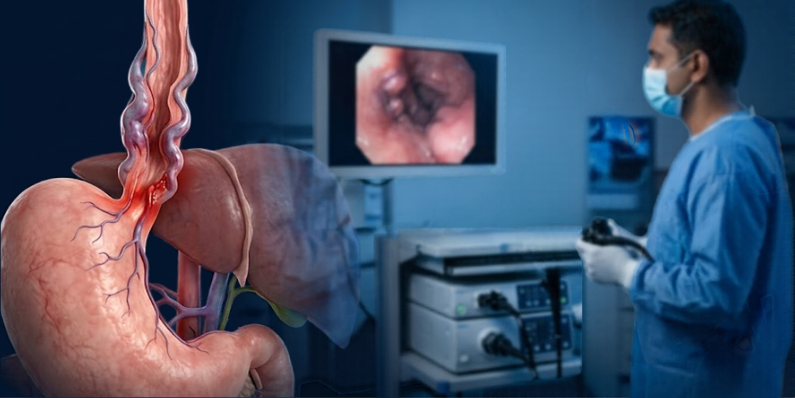
An upper GI endoscopy uses a thin flexible tube with a camera, passed through the mouth under sedation. It’s done as early as possible, generally within the first 12 hours, and sooner if the patient is unstable.
During the test, variceal band ligation places tiny rubber bands around the bleeding vein. The vein dies off and the bands fall away. Injection of a hardening solution (sclerotherapy) is an older alternative, and banding carries fewer complications.
Gastric varices, in the stomach, are different. They are harder to band, so doctors often use a medical glue injection or TIPS. If bleeding is torrential, a balloon tube can press on the veins temporarily while definitive treatment is arranged.
What if the bleeding doesn’t stop or comes back?
A TIPS (transjugular intrahepatic portosystemic shunt) is the usual next step.
A radiologist passes a stent through a neck vein into the liver, creating a channel that connects the portal vein to a liver vein.
Pressure drops, and bleeding risk falls with it. It’s used as a rescue if endoscopy and drugs fail or bleeding returns within days. In some high-risk patients, guidelines also suggest an early, pre-emptive TIPS within about 72 hours.
TIPS has trade-offs. It can worsen hepatic encephalopathy, a confusion caused by toxins bypassing the liver, and this post on why liver failure affects the brain explains it. A TIPS also doesn’t repair the liver. Surgical shunt operations are now rare, and if one is ever planned, it should be discussed with the transplant team first, since earlier surgery can complicate a later transplant.
How do you stop it bleeding again?
Most patients need repeat banding sessions plus a medicine that lowers portal pressure, and the cause of the liver damage must be treated.
- Banding is repeated until the varices shrink, followed by scheduled check endoscopies.
- Non-selective beta-blockers such as propranolol or carvedilol lower pressure in the portal vein. They aren’t suitable for everyone (low blood pressure and kidney problems are common reasons), so your doctor decides.
- Stop alcohol completely if it’s a cause or contributor.
- Avoid painkillers like ibuprofen unless your doctor approves.
- Treat the cause, whether that’s hepatitis, fatty liver or alcohol-related disease.
Never stop or change these medicines on your own.
Can bleeding varices be treated without a liver transplant?
Yes, in most patients. Published reviews report that initial treatment controls the bleeding in more than nine out of ten episodes.
A transplant doesn’t stop a bleed in the emergency room. It replaces the failing liver that caused the pressure problem. It’s rarely used as a rescue for bleeding that can’t be controlled, and then only when liver failure is also advanced. If bleeding is controlled, the cause is treated and liver function holds, some patients do not need a transplant at all.
When is a liver transplant needed after variceal bleeding?
A transplant is considered when the liver itself is failing, or when bleeding can’t be kept under control by other treatments.
When I assess a patient after a bleed, I look at two things together: how well the liver is working, and how the bleeding responded to treatment. Signs that point towards transplant assessment include:
- Decompensated cirrhosis: the liver can no longer cope, with fluid in the abdomen, jaundice or confusion alongside the bleed.
- A MELD score of about 15 or above, which is where many guidelines advise considering transplant evaluation. This post explains how the score works.
- Bleeding that returns despite banding, medicines or TIPS.
- Poor liver blood tests, malnutrition or declining kidney function.
Referral for assessment is worth considering after any major complication of cirrhosis, because the work-up takes time. A liver transplant assessment checks the heart, lungs, kidneys, infections, nutrition and alcohol use, and it discusses living and deceased donor options. Being referred doesn’t mean you’ll be listed.
Not every patient is a candidate. In one Lisbon study of patients who had bled, around four in ten had at least one possible barrier to transplant, and fewer than a quarter were formally assessed. Referral was linked to lower two-year mortality, though this was an observational study and can’t prove cause.
How long can you live after variceal bleeding?
There’s no single answer, because the outlook depends more on the state of the liver than on the bleed itself.
Published reviews put early deaths at roughly 15% to 20% today, compared with around 40% in the 1980s. Those figures come from studies of treated patients and can’t predict an individual outcome. People with well-preserved liver function and no further bleeding generally do better than those with advanced cirrhosis. Stopping alcohol, treating the cause and keeping follow-up appointments all help. For the wider picture, see how long you can live with liver failure without a transplant.
When should you see a liver specialist, and what should you ask?
See a specialist as soon as cirrhosis is diagnosed, and straight after a first bleed.
If you’re looking for a liver transplant surgeon in Pune, you can read about Dr. Bipin Vibhute and the hospital’s liver transplant service. Questions worth asking at any consultation:
- How large are my varices, and what’s my bleeding risk?
- How often should my endoscopy be repeated?
- Is my MELD score high enough for transplant assessment?
- Are beta-blockers safe for me?
If you or a family member has cirrhosis, has had a bleed, or has been told the varices are large, you can book an appointment with Dr. Bipin Vibhute, Liver and Multiorgan Transplant Surgeon at Jupiter Hospital, Baner, Pune, for an individual assessment. Bring previous endoscopy reports and recent blood tests. If someone is vomiting blood right now, go to the nearest emergency department instead.
Conclusion
Bleeding from varices is frightening, but it’s treatable, and it doesn’t always lead to a transplant.
The bleed is controlled with drugs, banding and sometimes a TIPS, and transplant becomes the question when the liver itself is running out of reserve.
Early specialist assessment lets you plan instead of react, and the right path depends on your diagnosis and individual circumstances. Keep your follow-up appointments, avoid alcohol, and speak to your doctor before changing any medicine.
Frequently Asked Questions
1.Is variceal bleeding always fatal?
No. Most bleeds are controlled with modern treatment, but it remains a serious emergency, and a minority of patients die in the following weeks, particularly when liver function is poor. Getting to hospital quickly improves the odds.
2.Can varices come back after banding?
Yes, they can. Banding removes the treated veins, but the pressure behind them stays high, which is why repeat endoscopies and medicines are part of the plan.
3.What foods should be avoided with oesophageal varices?
No specific food has been proven to trigger a bleed, and alcohol is the one to stop completely. If you also have fluid in the abdomen, your doctor may advise a low-salt diet, and many doctors suggest chewing food well.
4.Is banding painful?
It’s usually done under sedation. Chest discomfort or pain on swallowing for a few days afterwards is common.
5.Can I take painkillers like ibuprofen if I have varices?
Check with your doctor first. Anti-inflammatory painkillers such as ibuprofen and diclofenac can raise bleeding risk and affect the kidneys in people with cirrhosis, and no medicine should be started or stopped on your own.
6.Does everyone with cirrhosis need an endoscopy to look for varices?
Most people with cirrhosis are advised a screening endoscopy. Some may be able to skip or delay it after specific blood and scan tests, and your liver specialist decides which applies to you.
7.Can medicines prevent a first bleed?
Yes, in people with medium or large varices. Beta-blocker tablets or banding can lower the risk of a first bleed, and the choice depends on your blood pressure, heart rate, kidney function and other conditions.
8.What’s the difference between oesophageal and gastric varices?
Gastric varices form in the stomach lining instead of the food pipe. They’re harder to band, so doctors often use a medical glue injection or TIPS.
9.Can a TIPS replace a liver transplant?
No. A TIPS lowers portal pressure and helps control bleeding, but it doesn’t repair the damaged liver. In some patients it works as a bridge while transplant assessment continues.
10.Can a family member donate part of their liver for me?
In India, a living donor, usually a close relative, can donate a portion of their liver if they’re medically suitable and meet legal requirements. Registration for a deceased donor liver is another route, and the transplant team explains both during assessment.
Medical Disclaimer: This article is for general educational purposes only and does not replace an individual medical consultation, examination, diagnosis, or personalized treatment plan. Please consult a qualified healthcare professional for advice specific to your condition.
Recent Comments