


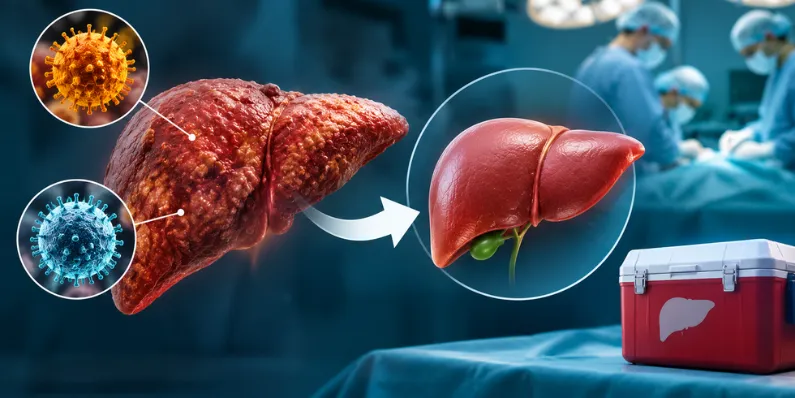
Being diagnosed with Hepatitis B or C doesn’t mean you’ll automatically need a liver transplant. But when the infection causes severe, permanent liver damage, medicines alone may no longer be enough to protect your health.
A liver transplant for hepatitis B and C may become necessary when the liver develops advanced cirrhosis, liver failure or certain types of liver cancer. The decision depends on how much damage has occurred, whether complications have developed and whether transplantation offers a better chance of survival.
At Dr. Bipin Vibhute’s liver and multiorgan transplant practice, we assess patients with advanced liver disease and help families understand when transplantation may be appropriate.
Key Takeaways
- Hepatitis B and C don’t automatically mean a patient needs a liver transplant.
- Antiviral medicines can control Hepatitis B and cure most Hepatitis C infections.
- Advanced cirrhosis, liver failure and selected liver cancers may require transplantation.
- A transplant can be performed in selected patients with active viral infection.
- Antiviral treatment and regular monitoring help protect the transplanted liver.
How Do Hepatitis B and C Affect the Liver?
Hepatitis B and C are viral infections that cause inflammation in the liver. For the basics of how the different hepatitis viruses compare, see 5 Must Know Things About Hepatitis A, B and C.
Although both infections affect the same organ, they behave differently.
What is Hepatitis B?
Hepatitis B is caused by the Hepatitis B virus (HBV).
It spreads through infected blood and certain body fluids, including during childbirth, sexual contact and sharing contaminated needles.
Some people clear the infection, while others develop chronic Hepatitis B, where the virus remains in the body for many years.
Chronic Hepatitis B can gradually damage liver cells and increase the risk of cirrhosis and liver cancer.
What is Hepatitis C?
Hepatitis C is caused by the Hepatitis C virus (HCV).
It mainly spreads through contact with infected blood, such as through unsafe injections, contaminated medical equipment or shared needles.
Many people don’t experience noticeable symptoms in the early stages.
Without treatment, chronic Hepatitis C can cause progressive liver scarring and eventually lead to cirrhosis.
How does long-term hepatitis damage the liver?
The damage generally develops in stages:
- Liver inflammation: The infection causes ongoing irritation and injury to liver cells.
- Fibrosis: Scar tissue begins to form as the liver tries to repair itself.
- Cirrhosis: Extensive scarring changes the liver’s structure and affects its normal functions.
- Decompensated cirrhosis: The damaged liver can no longer manage essential functions properly.
- Liver failure: The liver becomes unable to support the body’s needs.
Not everyone progresses through these stages. Early diagnosis and appropriate treatment can reduce the risk of serious liver complications.
Does Everyone With Hepatitis B or C Need a Liver Transplant?
No. Most people with Hepatitis B or C don’t need a liver transplant because antiviral treatment can control or cure the infection, depending on the virus.
The need for transplantation depends on the extent of liver damage, not simply whether a blood test shows a positive hepatitis result.
When can medicines manage the condition?
Patients with chronic Hepatitis B may benefit from antiviral medicines such as tenofovir or entecavir.
These medicines reduce viral multiplication and help prevent further liver damage.
For Hepatitis C, direct-acting antiviral (DAA) medicines can cure most infections by eliminating the virus from the body.
When might medicines not be enough?
The situation changes when the liver has already developed advanced structural damage.
For example:
- Severe cirrhosis may prevent the liver from performing essential functions.
- Fluid accumulation in the abdomen may develop.
- Internal bleeding may occur because of increased pressure in liver blood vessels.
- Toxins may accumulate in the blood and affect brain function.
- Liver cancer may develop in patients with chronic liver disease.
Antiviral medicines can control the infection, but they cannot reliably reverse advanced cirrhosis or restore a severely failing liver.
This is when our specialists may recommend a transplant evaluation.
When Does Hepatitis B Require a Liver Transplant?
Hepatitis B may require liver transplantation when chronic infection leads to decompensated cirrhosis, severe liver failure or selected cases of liver cancer.
Chronic Hepatitis B can damage the liver over several years, sometimes without causing noticeable symptoms until complications develop.
The following situations may indicate the need for transplant assessment.
1. Decompensated cirrhosis
Decompensated cirrhosis develops when extensive liver scarring begins to affect the organ’s ability to function.
Patients may experience:
- Swelling in the abdomen due to fluid accumulation.
- Yellowing of the skin and eyes.
- Repeated hospital admissions.
- Internal bleeding from enlarged blood vessels.
- Confusion or changes in behaviour.
When these complications occur, the patient should be evaluated by a liver specialist and transplant team.
2. Repeated ascites
Ascites means fluid accumulation inside the abdomen.
It can cause abdominal swelling, discomfort, difficulty eating and breathing problems.
Repeated or difficult-to-control ascites may indicate advanced liver disease and the need for transplant assessment. See Why Does Liver Failure Cause Swelling in the Stomach? for how it develops.
3. Hepatic encephalopathy
Hepatic encephalopathy occurs when a damaged liver cannot adequately remove certain toxins from the blood. For why liver disease affects the brain, see Why Does Liver Failure Affect the Brain?
These toxins can affect the brain.
Symptoms may include:
- Confusion.
- Unusual sleep patterns.
- Difficulty concentrating.
- Changes in behaviour.
- Reduced awareness in severe cases.
Repeated episodes can indicate worsening liver function.
4. Hepatitis B-related liver cancer
Chronic Hepatitis B increases the risk of hepatocellular carcinoma (HCC), the most common type of primary liver cancer.
A liver transplant may be considered for selected patients whose cancer meets accepted transplant criteria and hasn’t spread beyond the permitted limits.
The number and size of tumours, blood vessel involvement and overall health influence the decision.
5. Severe liver failure
When the liver can no longer support essential body functions, transplantation may become the only definitive treatment option. See liver failure for causes, symptoms and treatment.
In some cases of acute liver failure, urgent transplant assessment is necessary.
Doctors shouldn’t wait for every complication to develop before considering transplantation. Early referral allows time for proper evaluation and planning.
When Is a Liver Transplant Needed for Hepatitis C?
A transplant may be needed when Hepatitis C causes advanced cirrhosis, irreversible liver failure or selected cases of liver cancer.
Hepatitis C is now treatable with medicines that can eliminate the virus. However, patients who already have severe liver damage may continue to experience complications even after the virus is cleared.
1. Advanced liver cirrhosis
Long-term Hepatitis C infection can cause extensive scarring.
When the liver becomes severely damaged, it may struggle to:
- Process nutrients.
- Remove harmful substances from the blood.
- Produce proteins needed for normal body functions.
- Regulate blood clotting.
- Support normal digestion.
2. Repeated complications of cirrhosis
Some patients develop complications that require repeated hospital treatment.
These include:
- Ascites that doesn’t respond adequately to treatment.
- Repeated bleeding from enlarged veins in the food pipe or stomach.
- Hepatic encephalopathy.
- Kidney dysfunction related to advanced liver disease.
Repeated complications suggest that the liver may no longer be functioning well enough to support the body.
3. Hepatitis C-related liver cancer
Chronic Hepatitis C can increase the risk of hepatocellular carcinoma.
In selected patients, transplantation can treat both the underlying cirrhosis and the cancer.
However, the cancer must meet accepted transplant criteria.
4. Liver failure despite viral treatment
Some patients successfully clear Hepatitis C but continue to have severe cirrhosis.
This happens because removing the virus doesn’t automatically remove the scar tissue already formed in the liver.
A patient can have undetectable Hepatitis C virus levels and still need a liver transplant if irreversible liver damage has progressed.
Can Hepatitis B and C Be Treated Without a Liver Transplant?
Yes. Both infections have effective medical treatments, and many patients can avoid transplantation when the disease is diagnosed and managed before severe liver damage develops.
However, treatment is different for each virus.
How is Hepatitis B treated?
Chronic Hepatitis B is commonly managed with antiviral medicines.
Doctors may prescribe:
- Tenofovir disoproxil fumarate.
- Tenofovir alafenamide.
- Entecavir.
These medicines reduce the amount of virus in the blood and help limit further liver damage.
Treatment usually controls Hepatitis B rather than completely eliminating the virus. Many patients need long-term treatment and regular monitoring.
Patients with cirrhosis shouldn’t stop prescribed antiviral medicines without specialist advice because viral reactivation can cause serious liver complications.
How is Hepatitis C treated?
Hepatitis C is treated using direct-acting antiviral medicines.
These medicines target specific stages of the virus’s life cycle and stop it from multiplying.
Most patients can achieve a cure after completing the recommended treatment course.
In India, the national viral hepatitis programme states that free screening, diagnosis and treatment for hepatitis B and C are being made available at all levels of health care in a phased manner, as set out on the NVHCP programme page. For practical guidance on living with the infection, see How Do You Manage Hepatitis C?
The doctor checks for sustained virological response (SVR), which means the virus is no longer detectable in the blood 12 weeks after treatment ends.
Can treatment prevent a transplant?
Yes, early antiviral treatment can prevent or reduce the risk of progressive liver damage.
However, patients with advanced cirrhosis may still require transplant evaluation even after successful viral treatment.
Clearing the infection and restoring the liver’s damaged structure are two different things.
Can a Patient With Active Hepatitis B or C Undergo a Liver Transplant?
Yes. Selected patients can undergo liver transplantation even when Hepatitis B or C is still detectable in their blood. For how suitability is assessed in general, see Liver Transplant Eligibility: Who Qualifies and Which Tests Are Done?
The transplant team plans antiviral treatment to control the infection and protect the new liver.
What happens if the patient has Hepatitis B?
Patients with chronic Hepatitis B generally receive antiviral medicines before transplantation when indicated.
Medicines such as entecavir or tenofovir help reduce viral multiplication.
After surgery, the patient needs preventive treatment to reduce the risk of Hepatitis B returning in the transplanted liver.
What happens if the patient has Hepatitis C?
Doctors assess whether Hepatitis C treatment should happen before or after transplantation.
The decision depends on:
- Severity of liver disease.
- Whether the patient has liver cancer.
- Expected waiting time for a donor liver.
- Likelihood of responding to antiviral medicines.
- The patient’s overall medical condition.
Hepatitis C can be treated successfully after transplantation using direct-acting antiviral medicines.
Should transplantation be delayed until the virus becomes undetectable?
Not always. In patients with severe or rapidly worsening liver failure, transplantation shouldn’t be delayed solely to achieve viral suppression.
The transplant and hepatology teams must decide the safest timing based on the patient’s condition.
What Tests Help Doctors Decide Whether a Liver Transplant Is Needed?
Doctors use blood tests, liver imaging, viral tests and an overall health assessment to determine how badly the liver is damaged and whether transplantation is appropriate.
A positive Hepatitis B or C test alone isn’t enough to make this decision.
Our transplant team considers several findings together.
1. Liver function tests
These blood tests help assess how well the liver is working.
They may include:
- Bilirubin, which helps assess the liver’s ability to process waste products.
- Albumin, a protein produced by the liver.
- AST and ALT, enzymes that can increase when liver cells are damaged.
- INR, a test that helps assess blood clotting.
2. Viral load testing
Different tests are used for the two infections.
- HBV DNA: Measures the amount of Hepatitis B virus in the blood.
- HCV RNA: Detects active Hepatitis C infection and measures viral levels.
These tests help doctors assess the infection and plan antiviral treatment.
3. Fibrosis assessment
Fibrosis means scarring of the liver.
Doctors may recommend FibroScan or other non-invasive tests to understand the extent of scarring; Fibroscan: Non-Invasive Diagnostic Device for Liver Health explains how it works. The MELD score uses blood test results to estimate the severity of advanced liver disease, as explained in What Is the MELD Score and Who Gets Priority for a Liver Transplant?
In selected cases, a liver biopsy may be required.
4. Liver imaging
Ultrasound, CT scans and MRI help assess:
- Liver size and structure.
- Signs of cirrhosis.
- Fluid accumulation.
- Enlarged blood vessels.
- Suspicious liver growths or tumours.
5. MELD score
The Model for End-Stage Liver Disease (MELD) score uses blood test results to estimate the severity of advanced liver disease and help assess transplant priority.
The calculation may include bilirubin, INR, creatinine and sodium, depending on the scoring system used.
A MELD score is an important assessment tool, but doctors don’t decide transplant suitability using this score alone.
They also consider complications, liver cancer, general health and expected benefit from transplantation.
Can Hepatitis B or C Return After a Liver Transplant?
Yes, either virus can affect the transplanted liver if appropriate preventive treatment and monitoring aren’t followed. However, effective medicines are available to reduce this risk.
The approach is different for each infection.
Hepatitis B recurrence after transplantation
Hepatitis B can return in the new liver if preventive treatment isn’t given appropriately.
To reduce this risk, doctors may use:
- Antiviral medicines: Entecavir or tenofovir to suppress viral multiplication.
- Hepatitis B immunoglobulin (HBIG): An antibody preparation that provides additional protection against the virus.
- Regular monitoring: HBV DNA and other blood tests to detect viral activity.
The combination and duration of preventive treatment depend on the patient’s risk of recurrence.
Many patients require long-term, often lifelong, antiviral therapy after transplantation.
Hepatitis C recurrence after transplantation
If Hepatitis C is still active when transplantation takes place, the virus can infect the new liver.
However, direct-acting antiviral medicines can treat and cure Hepatitis C after transplantation.
Doctors monitor HCV RNA and select medicines based on the patient’s condition and possible interactions with anti-rejection medicines.
Why is regular monitoring important?
After transplantation, patients need regular follow-up to assess:
- Liver function.
- Viral activity.
- Kidney function.
- Anti-rejection medicine levels.
- Possible medication side effects.
Taking prescribed medicines consistently and attending follow-up appointments are essential for protecting the transplanted liver.
What Is Recovery Like After a Liver Transplant for Hepatitis?
Recovery involves hospital monitoring, regular medicines, antiviral treatment where needed and long-term follow-up with the transplant team.
The recovery period varies depending on the patient’s condition before surgery and whether complications develop.
1. Hospital monitoring
Immediately after surgery, patients are monitored in the ICU.
The medical team checks:
- Liver function.
- Blood circulation and oxygen levels.
- Kidney function.
- Signs of infection.
- Bleeding or other surgical complications.
2. Anti-rejection medicines
The body’s immune system may recognise the transplanted liver as foreign and try to attack it.
Immunosuppressants, also called anti-rejection medicines, help prevent this response.
Patients must take these medicines exactly as prescribed.
3. Antiviral treatment
Patients transplanted for Hepatitis B usually continue preventive antiviral treatment.
Patients with Hepatitis C may receive direct-acting antiviral treatment before or after surgery, depending on their clinical situation.
4. Regular follow-up
Follow-up visits help doctors monitor the new liver and adjust medicines when necessary.
Blood tests and imaging may be recommended according to the patient’s recovery.
5. Returning to daily activities
Many patients gradually return to their usual activities after recovery. For practical steps that help, see 6 Ways To Improve Your Recovery After Liver Transplant.
However, exercise, work and other physical activities should resume according to the transplant surgeon’s advice.
A liver transplant treats severe liver failure, but it doesn’t remove the need for lifelong medical care.
How Can Patients Protect Their Liver Before and After Transplantation?
Regular medical care, appropriate antiviral treatment and healthy daily habits can help reduce further liver damage and protect liver health after transplantation.
Patients with viral hepatitis should take the following steps.
1. Attend regular specialist consultations
Don’t wait for symptoms to become severe.
Regular consultations help doctors monitor viral activity, liver function and possible complications.
2. Take antiviral medicines as prescribed
Missing doses or stopping treatment without medical advice can allow viral activity to increase.
Never stop Hepatitis B or post-transplant antiviral medicines on your own.
3. Avoid alcohol
Alcohol can add to liver damage, especially in people who already have chronic hepatitis or cirrhosis.
Avoid alcohol if you have advanced liver disease or have undergone a liver transplant.
4. Discuss hepatitis vaccination
There is an effective vaccine for Hepatitis B.
People who aren’t infected and are not already immune should discuss vaccination with their doctor.
There is currently no approved vaccine for Hepatitis C.
5. Follow safe food and lifestyle habits
Patients should:
- Eat a balanced diet.
- Maintain a healthy weight.
- Avoid unprescribed herbal medicines and supplements.
- Exercise according to medical advice.
- Avoid sharing needles, razors or other items that may carry infected blood.
6. Continue liver cancer screening when recommended
Patients with cirrhosis or other high-risk conditions may need regular liver imaging and alpha-fetoprotein (AFP) testing.
Clearing Hepatitis B or C doesn’t always eliminate the risk of liver cancer, particularly when cirrhosis is already present.
Liver Transplant Consultation in Pune
If you or a family member has advanced liver disease due to Hepatitis B or C, an early transplant assessment can help identify the available treatment options.
At Dr. Bipin Vibhute’s liver and multiorgan transplant practice in Pune, we evaluate patients with complex liver conditions and help families understand transplant planning and long-term care.
Consult Dr. Bipin Vibhute to discuss liver function, transplant eligibility and the appropriate next steps for managing advanced liver disease.
Frequently Asked Questions
- Can Hepatitis B spread to family members after a liver transplant?
Yes, Hepatitis B can spread through infected blood and certain body fluids, but not through normal household contact. Family members should discuss Hepatitis B vaccination and screening with their doctor.
- Can a person with Hepatitis B or C donate blood?
Generally, people with current or previous Hepatitis B or C infection aren’t eligible to donate blood under standard blood donation screening requirements. They should inform the blood bank about their medical history.
- Can a person with Hepatitis B or C have children?
Yes, many people with these infections can have children. However, pregnancy planning should involve a specialist because Hepatitis B can pass from mother to baby, and preventive treatment can greatly reduce this risk.
- Can Hepatitis C come back after successful treatment?
Yes, a person can become infected again after being cured if exposed to the virus. Successful treatment doesn’t provide immunity against future Hepatitis C infection.
- Can a person with cirrhosis develop liver cancer even after Hepatitis C is cured?
Yes, the risk can remain, particularly when cirrhosis is already present. Regular liver cancer surveillance should continue as advised by the specialist.
- Can a person with Hepatitis B or C live a normal life without a transplant?
Yes, many people manage their condition with appropriate treatment and monitoring. The outlook depends on the extent of liver damage and how well the infection responds to treatment.
- Can a person with Hepatitis B or C undergo kidney transplantation as well?
Yes, selected patients with kidney failure and viral hepatitis may undergo kidney transplantation after careful evaluation. The medical team must assess infection control, liver function and overall transplant risks.
- Can Hepatitis B or C affect the transplanted liver even if the patient feels healthy?
Yes, viral activity may occur without obvious symptoms. Regular viral testing and liver function monitoring help detect problems early.
- Is a liver transplant possible if the patient also has diabetes?
Yes, selected patients with diabetes can undergo liver transplantation. Doctors assess blood sugar control, heart health, kidney function and other medical risks before approving surgery.
- Does a liver transplant completely remove the risk of death from liver disease?
No surgery can guarantee this. A transplant can treat severe liver failure, but patients still need anti-rejection medicines, regular monitoring and ongoing medical care.
Final Thoughts
Hepatitis B and C don’t automatically mean that a liver transplant is necessary. The need for surgery arises when the infection causes advanced liver damage that cannot be adequately managed with medicines and other treatments.
Early diagnosis, antiviral treatment and regular monitoring can help prevent serious complications. However, if cirrhosis progresses to liver failure or selected liver cancers develop, transplant evaluation becomes an important part of treatment planning.
At Dr. Bipin Vibhute’s liver and multiorgan transplant practice, we believe that understanding the disease early helps patients and families make informed decisions.
The right time to seek a transplant opinion is before liver disease becomes an emergency.
Medical Disclaimer
This article is intended for general educational purposes and doesn’t replace individual medical advice, diagnosis or treatment. Hepatitis B and C treatment, transplant eligibility and surgical decisions depend on the patient’s liver function, viral status, associated medical conditions and overall health. Never stop antiviral medicines or delay a recommended transplant assessment without consulting your treating specialist.
Recent Comments